
Collection: Float Valves & Parts

Float Valves & Parts
-
Mtm Brass Float Valve ...
Regular price $55.50Regular priceper -
Mtm Brass Float Valve ...
Regular price $61.03Regular priceper -
R700l-3 Brass Float Va...
Regular price $61.99Regular priceper -
R700l-4 Brass Float Va...
Regular price $94.99Regular priceper -
R700l-6 Brass Float Va...
Regular price $106.99Regular priceper -
Float Tank with Lid, P...
Regular price $15.99Regular priceper -
Float Valve Plastic 3/...
Regular price $20.99Regular priceper -
Hudson 1" Float V...
Regular price $69.40Regular priceper -
K4 Repair Kit for Huds...
Regular price $38.39Regular priceper -
Poly Float, 4" Di...
Regular price $14.73Regular priceper -
Brass Float Valve 3/8&...
Regular price $46.48Regular priceper -
St-8k 1/2MPT Adapter S...
Regular price $16.95Regular priceper -
St-8 Float Valve 1/2&q...
Regular price $43.54Regular priceper -
FLOAT VALVE ROD 1/4-20...
Regular price $10.03Regular priceper -
FLOAT VALVE BRASS ROD ...
Regular price $5.65Regular priceper


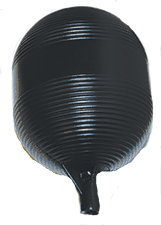


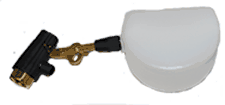


Float Valves for Buffer Tanks
Your pump does not care how big your buffer tank is. It cares whether water is there the instant it pulls, and the float valve is the part that makes that true. Sun Brite Supply stocks brass and plastic float valves from 3/8 inch to 1 inch, plus floats, rods, and repair kits. Tell us your machine's GPM at 301-519-9274 and we will size the valve in one call.
How a Float Valve Keeps Your Pump Alive
A pressure washer pump that sucks air dies young. Cavitation hammers the valves and seals, and a dry run can cook packings in minutes, turning a $100 problem into a $900 pump. The float valve sits in your buffer tank, opens as the water level drops, and closes when the tank refills. That simple mechanical loop lets a 5.5 or 8 GPM machine run all day off a house spigot that only delivers 4, because the tank absorbs the difference while the customer's supply catches up.
Sizing the Valve to Your Flow
Here is where most float valve buys go wrong. The valve has its own flow capacity, and a small seat that passes 3 GPM cannot keep up with a 5.5 GPM pump on a long rinse. The tank slowly drains, then the pump starts slurping air right in the middle of a job. Match the valve's inlet size and flow rating to your machine: 3/8 and 1/2 inch valves cover most 4 to 5.5 GPM rigs on decent city pressure, and 3/4 to 1 inch valves like the Hudson are the safe call for 8 GPM machines or weak rural supplies. Bigger seat, faster recovery, no starving.
Brass or Plastic, and What Wears Out
Brass bodies take vibration, heat, and years of bouncing down the road. Plastic valves cost half as much and are fine in a stationary tank, but the stems snap when a full tank sloshes on a trailer. The wear parts are the same either way: the rubber seat washer that starts weeping first, the rod that bends when the float catches on a baffle, and the float itself once it takes on water. All three are replaceable. A repair kit or a new poly float costs a fraction of the assembly, so check those before you replace the whole valve.

Float Valve Lineup
| Valve or part | Connection | Body | Price |
|---|---|---|---|
| Brass Float Valve with Float | 3/8" MPT | Brass | $46.48 |
| Suttner St-8 Float Valve with Float | 1/2" FPT | Brass | $43.54 |
| St-8k Adapter for St-8 | 1/2" MPT | Brass | $16.95 |
| Hudson Float Valve, high flow | 1" | Brass | $69.40 |
| K4 Repair Kit for Hudson 1" | Kit | Rebuild parts | $38.39 |
| Robert R700l-6 Float Valve | 3/4" MPT | Brass | $106.99 |
| Plastic Float Valve with Float | 3/4" M | Plastic | $20.99 |
| Poly Float, 4" x 5", 1/4-20 spud | 1/4-20 | Replacement float | $14.73 |
| Float Valve Rod, 1/4-20 x 8" | 1/4-20 | Brass rod | $10.03 |
Some sizes run out during the busy season. Call first if the job is tomorrow.

From the Field
The parts we sell tell you how these fail. Rods and poly floats outsell complete valves, because the float and rod take the abuse when a tank gets moved or the water sloshes hard on the highway. If your tank overflows overnight, the seat washer is worn or debris is stuck under it, and a rebuild beats a replacement. If your pump surges late in a driveway job, time how fast the tank refills with the machine off. A slow refill is a supply or valve flow problem, not a pump problem, and it is a lot cheaper to fix. One setup tip that saves grief: plumb the tank outlet full size from the bottom of the tank and keep it as short as possible. A big valve cannot save a starved outlet.
Related Collections
- Water tanks for buffer and soft wash builds
- Soft wash equipment
- Ball valves and check valves
- Thermal relief valves
- Garden hose pump inlets
- Strainers and water filters
- Hose barbs
- Unloader valves
- Stop by the Gaithersburg store and we will match parts on the counter
Frequently Asked Questions
What size float valve do I need for my buffer tank?
Size it to your pump's draw. 3/8 and 1/2 inch valves handle most 4 to 5.5 GPM machines on city water. Go 3/4 to 1 inch for 8 GPM rigs or weak supplies, since the valve must refill the tank at least as fast as the pump empties it.
Why does my pump still cavitate with a buffer tank?
Usually the tank is refilling slower than the pump is drawing. The float valve seat may be too small, the supply is weak, or the tank outlet is undersized or kinked. Time the refill rate with the machine off and the answer shows itself.
Is a brass float valve worth it over plastic?
On a trailer or skid, yes. Brass survives vibration and sloshing that snaps plastic stems. For a stationary shop tank, a plastic valve at half the price does the job fine.
How big should a buffer tank be?
35 to 65 gallons covers most 4 to 8 GPM machines. The tank is not storage, it is a cushion that buys the supply line a few minutes to catch up. Bigger tanks add weight fast, since water runs over 8 pounds a gallon.
Can I fix a float valve that will not shut off?
Most of the time. A valve that weeps or overflows usually needs a new seat washer or has grit stuck in the seat. Floats that sink and rods that bend are also cheap swaps. Rebuild first, replace second.
Where should the float valve mount in the tank?
High on the tank wall through a bulkhead fitting, positioned so the float swings freely at your target fill level and shuts off below the overflow. Keep it clear of baffles and the fill stream so it does not chatter open and closed.