
Collection: Safety Relief Valves

Safety Relief Valves
-
Safety Relief Valve 1/...
Regular price $24.99Regular priceper -
Safety Relief Valve 1/...
Regular price $25.99Regular priceper -
Safety Relief Valve 1/...
Regular price $24.99Regular priceper -
Safety Relief Valve 1/...
Regular price $25.99Regular priceper -
Safety Relief Valve 3/...
Regular price $25.54Regular priceper -
Safety Relief Valve 3/...
Regular price $38.68Regular priceper

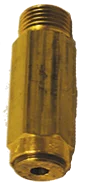

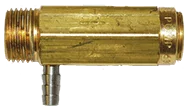


Safety Relief Valves
Hot water machines make their own trouble. A burner keeps adding heat even after flow stops, and trapped water expands with nowhere to go. A safety relief valve is the pop-off that vents that pressure before a coil or hose does it for you. Every valve here adjusts from 1,000 to 6,000 PSI, so one part covers nearly any rig. Questions on fitment? Call 301-519-9274 and we will match the thread to your pump head.
What a Safety Relief Valve Does Differently
People use relief valve and safety valve interchangeably, but the two behave differently when things go wrong. A standard pressure relief valve opens gradually, metering out just enough water to hold pressure near its set point. A safety relief valve is a pop-off. Once pressure crosses the set point, it snaps fully open and dumps flow hard until the system drops back to safe territory, then it reseats. That fast, full-open action is what you want as the last line of defense on a machine that can spike violently, and hot water rigs can. A scaled-up burner coil restricts flow, steam forms in the coil during dry-fire, and either one can send pressure past what your unloader ever sees.
Where It Goes on the Machine
On cold water rigs, the safety valve threads into a spare port on the discharge side of the pump, same neighborhood as the unloader. On hot water machines it earns its keep protecting the coil circuit, plumbed between the pump discharge and the coil inlet. If the coil scales shut or the burner fires against a closed gun for too long, the valve pops before the coil bulges. Aim the vent down and away from the operator. If the valve sits inside a cabinet or enclosed trailer, buy the hose barb outlet version and run the discharge line out through the floor or back to your tank.
Fitment Guide
All six valves share the same 1,000 to 6,000 PSI adjustment range. You are really choosing two things, the inlet thread that matches your open port and whether you need a routed discharge.
| Valve | Inlet Thread | Outlet | Range | Price |
|---|---|---|---|---|
| Safety Relief Valve 1/4 MPT | 1/4" MPT | Open vent | 1,000-6,000 PSI | $24.99 |
| Safety Relief Valve 1/4 MPT, Hose Barb | 1/4" MPT | Hose barb | 1,000-6,000 PSI | $25.99 |
| Safety Relief Valve 3/8 MPT | 3/8" MPT | Open vent | 1,000-6,000 PSI | $25.54 |
| Safety Relief Valve 3/8 MPT, Hose Barb | 3/8" MPT | Hose barb | 1,000-6,000 PSI | $38.68 |
| Safety Relief Valve 1/2 MPT | 1/2" MPT | Open vent | 1,000-6,000 PSI | $24.99 |
| Safety Relief Valve 1/2 MPT, Hose Barb | 1/2" MPT | Hose barb | 1,000-6,000 PSI | $25.99 |

Setting and Testing
Set the pop-off point 10 to 15 percent above your machine's maximum working pressure. A 3,500 PSI hot water skid should pop around 4,000. Verify with a gauge, not by feel. Test the valve a few times a season by bringing the machine to pressure and confirming the setting has not drifted. Coil descaling acid, hard water, and winter storage all work against the spring and seat. When a safety valve starts weeping at normal pressure and adjustment will not cure it, replace it. At around $25, there is no rebuild worth your Saturday.

From the Field
Most of the safety valves we sell go on hot water machines right after a coil descaling job. Here is why. Scale builds in the coil for years, the operator finally acid-flushes it, and chunks of loosened scale lodge in the old safety valve seat on the way out. The valve drips, somebody cranks it shut, and now the rig has no overpressure protection at all with a freshly restricted coil. Make the new valve part of the descaling bill. And if your burner machine never had a safety valve, add one this week. A ruptured coil costs hundreds to replace plus the downtime, against a $25 part you install in ten minutes.
Related Collections
- Pressure relief valves for proportional overpressure control
- Thermal relief valves for bypass heat protection
- Rupture discs for single-use burst protection
- Unloader valves
- Hot water pressure washers and hot water skids
- Burner parts and easy start valves
- Pressure gauges
Need it today? Our Gaithersburg store serves contractors across Montgomery County. Call ahead and we will have it at the counter.
Frequently Asked Questions
What is a safety relief valve on a pressure washer?
It is a spring-loaded pop-off valve that snaps fully open when system pressure crosses its set point, dumping water fast to protect the pump, coil, and hoses. It reseats automatically once pressure drops to a safe level.
How is a safety relief valve different from a pressure relief valve?
A pressure relief valve opens gradually and meters flow in proportion to the overpressure. A safety relief valve pops fully open all at once. The pop action makes it the better last-resort device on machines that can spike hard, especially hot water rigs.
Does a hot water pressure washer need a safety relief valve?
Yes. Burner coils scale up over time and restrict flow, and a coil can flash water to steam if flow stops while the burner fires. A safety valve plumbed near the coil vents that pressure before the coil ruptures.
What pressure should I set the pop-off at?
About 10 to 15 percent above maximum working pressure. A 3,500 PSI machine should pop near 4,000 PSI. All the valves in this collection adjust anywhere from 1,000 to 6,000 PSI, so one valve covers most setups.
When should I use the hose barb outlet version?
Any time the valve sits where free discharge could hit a person or soak equipment, such as cabinets and enclosed trailers. The barb lets you run a discharge line to the ground or back to your buffer tank.
How often should a safety relief valve be replaced?
Test it a few times per season and replace it when it weeps at normal operating pressure or the setting drifts. On hot water machines, replace it whenever you descale the coil, since loosened scale often ruins the old seat.