
Collection: Tees
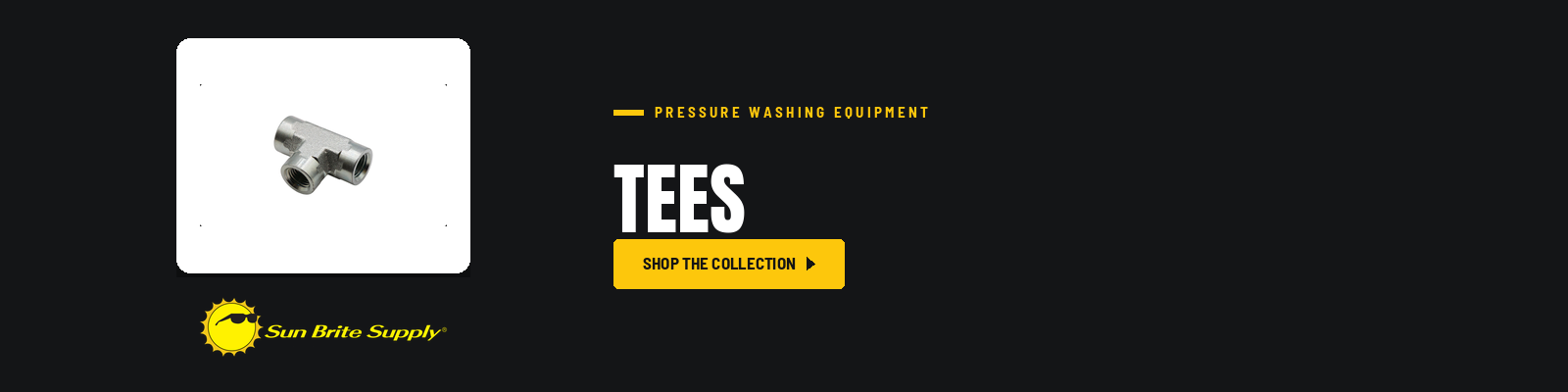
Tees
-
Steel High Pressure Tee
Regular price $14.14Regular priceper -
Steel High Pressure St...
Regular price From $12.99Regular priceper -
Steel High Pressure Br...
Regular price From $12.99Regular priceper -
Steel Tee 1/2" Fp...
Regular price $7.18Regular priceper -
Steel Street Tee 1/2&q...
Regular price $7.12Regular priceper -
Brass Tee Fitting for ...
Regular price From $7.04Regular priceper -
Brass Street Tee Fitti...
Regular price From $5.95Regular priceper -
Brass Branch Tee Fitti...
Regular price From $8.88Regular priceper -
304 Stainless Steel Te...
Regular price From $14.95Regular priceper -
Stainless Tee 3/8 X 3/...
Regular price $19.02Regular priceper -
Steel Branch Tee 1/2&q...
Regular price $7.38Regular priceper

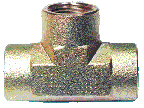

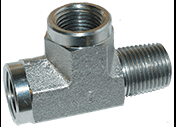

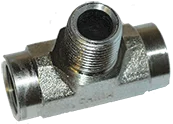


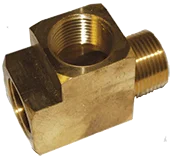


Tee Fittings
Sooner or later every rig needs to split a line. A tee fitting lets you pull a gauge port off the pump head, feed two hose reels from one manifold, or plumb a thermal relief valve without redoing the whole circuit. Sun Brite Supply keeps brass, plated steel, and stainless tees on the shelf in Gaithersburg. If you are not sure which threads you are looking at, call 301-519-9274 and we will sort it out.
Standard, Street, and Branch Tees Explained
All three shapes move water the same way. The difference is which port carries male threads, and picking the right one saves you a nipple and a leak point.
A standard tee has three female ports, so it accepts nipples or male fittings on every side. A street tee swaps one run end to male threads, handy for screwing straight into a pump head or manifold port. A branch tee puts the male threads on the branch leg, which lets you tee off a female port without adding a close nipple. Fewer joints means fewer places to leak at 3,500 PSI.
Brass, Plated Steel, or Stainless
Plated steel high pressure tees are the workhorses for discharge plumbing. They take pressure well and cost little, but once the zinc plating wears they will rust, so plan on replacing them every few seasons. Brass will not rust and machines nicely, which makes it the default for water inlets, bypass loops, and downstream chemical lines. Stainless costs the most and shrugs off both rust and cleaning chemicals, so soft wash guys running bleach pick stainless every time. One warning on our 150 class stainless tees: 150 pound class fittings belong on chemical and supply lines, not on the high pressure side. For discharge plumbing, stick with the forged high pressure tees.

Tee Fitting Quick Reference
| Tee | Material | Best use | Price |
|---|---|---|---|
| Brass Street Tee | Brass | Inlet and bypass plumbing | $5.95 |
| Brass Tee | Brass | Low pressure splits, chemical feed | $7.04 |
| Brass Branch Tee | Brass | Teeing off a female port | $8.88 |
| Steel Street Tee 1/2" | Plated steel | Manifold and reel plumbing | $7.12 |
| Steel Tee 1/2" FPT x3 | Plated steel | High flow discharge splits | $7.18 |
| Steel Branch Tee 1/2" | Plated steel | Gauge and relief valve ports | $7.38 |
| Steel HP Street Tee | Plated steel | Pump head connections | $12.99 |
| Steel HP Branch Tee | Plated steel | Discharge side branches | $12.99 |
| Steel High Pressure Tee | Plated steel | General discharge splits | $14.14 |
| 304 Stainless Tee, 150 class | Stainless | Chemical and supply lines | $14.95 |
| Stainless Tee 3/8" | Stainless | Soft wash and bleach systems | $19.02 |

From the Field
Most tee problems walk in the door as leaks, and most of those leaks trace back to thread prep, not the fitting. NPT threads seal on the taper, so use thread sealant paste or three wraps of tape, start it two threads back from the opening, and stop tightening when it gets hard, not when it bottoms out. Cracked brass tees usually mean someone put a wrench on the fitting body instead of the hex, or ran a brass tee on the discharge side of a big machine. If a tee is going anywhere near bleach, spend the extra ten dollars on stainless. We replace rusted plated tees on soft wash rigs weekly, and the fix always costs more than the fitting did.
Related Fitting Collections
- All fittings and adapters
- Brass pipe fittings, steel pipe fittings, and stainless steel pipe fittings
- 90 degree elbows and cross fittings
- Close nipples and hex bushings
- Quick connects and thermal relief valves
- Grab fittings same day at our Gaithersburg store
Frequently Asked Questions
What is the difference between a street tee and a branch tee?
A street tee has male threads on one end of the straight run. A branch tee has male threads on the side leg. Both save you a close nipple, just in different directions.
Are brass tees strong enough for high pressure lines?
Small brass tees handle typical 3/8 inch gun and hose circuits fine, but on 4,000 PSI discharge plumbing we steer you to forged steel high pressure tees. Save brass for inlets, bypass, and chemical lines.
Can I use a 150 class stainless tee on the discharge side?
No. 150 pound class fittings are for low pressure chemical and water supply plumbing. High pressure discharge needs fittings rated for your machine's full PSI.
Can I run two guns off one machine with a tee?
Yes, if the pump has the flow. Split an 8 GPM machine with a tee and each gun gets about 4 GPM, and both guns need nozzles sized for the split flow. Under 5 GPM total, two guns is wishful thinking.
How do I keep NPT tee fittings from leaking?
Seal the male threads with paste or three wraps of PTFE tape, started two threads back. Tighten snug plus a turn. Overtightening splits brass and galls stainless.
What size tee do I need?
Match the pipe size already in the circuit, usually 3/8 inch NPT on gun and hose plumbing and 1/2 inch on manifolds and reels. Bring the old fitting to the counter or call 301-519-9274 and we will match threads for you.