
Collection: Rotating Nozzles

Rotating Nozzles
-
St-457 5.5 Turbo Nozzl...
Regular price $144.99Regular priceper -
Aqua Rocket Rotating T...
Regular price From $280.45Regular priceper -
Hydraflex Aqua-Rocket 4.0
Regular price $225.00Regular priceper -
Pa Rotating Tubo Nozzl...
Regular price $95.33Regular priceper -
Pa Rotating Nozzle 365...
Regular price $84.94Regular priceper -
Rotomax Rotating Tip N...
Regular price $88.24Regular priceper -
Suttner 5000 PSI Rotar...
Regular price $110.68Regular priceper -
Rotojet 5800 PSI Nozzle
Regular price From $146.99Regular priceper -
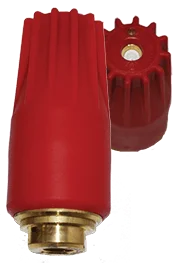
UR32 Red 5100 PSI Rota...
Regular price From $75.33Regular priceper -
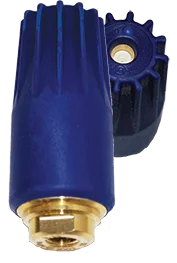
UR25 Blue 3650 PSI Rot...
Regular price From $56.99Regular priceper -
Ar Hydro Ex Turbo Nozz...
Regular price From $371.99Regular priceper -
Idk 3.5 Dirt Killer No...
Regular price $302.37Regular priceper -
Idk-10 Brown Dirt Kill...
Regular price $274.95Regular priceper -
Idk-4.5 Green Dirt Kil...
Regular price $274.95Regular priceper -
Idk-5.5 Black Dirt Kil...
Regular price $274.95Regular priceper -
Idk-7.0 Blue Dirt Kill...
Regular price $274.95Regular priceper -
Idk-8.0 Red Dirt Kille...
Regular price $274.95Regular priceper -
Rotating Nozzle #4.5
Regular price $210.63Regular priceper -
Rotojet 3700 PSI 3.0 N...
Regular price $61.14Regular priceper -
Rotojet 3700 PSI 4.5 N...
Regular price $61.14Regular priceper -
Rotojet 4500 PSI 3.5 N...
Regular price From $80.32Regular priceper -
Rotojet 4500 PSI 4.0 N...
Regular price $96.39Regular priceper -
Rotojet 4500 PSI 4.5 N...
Regular price $96.39Regular priceper -
Rotojet 4500 PSI 5.0 N...
Regular price $96.39Regular priceper -
Rotojet 4500 PSI 5.5 N...
Regular price $96.39Regular priceper -
St-457 10 Turbo Nozzle...
Regular price $144.99Regular priceper -
St-457 3.0 Turbo Nozzl...
Regular price $182.30Regular priceper -
St-457 4.0 Turbo Nozzl...
Regular price $144.99Regular priceper -
St-457 4.5 Turbo Nozzl...
Regular price $144.99Regular priceper -
St-457 5.0 Turbo Nozzl...
Regular price $136.99Regular priceper -
St-457 6.0 Turbo Nozzl...
Regular price $144.99Regular priceper -
St-457 7.0 Turbo Nozzl...
Regular price $144.99Regular priceper -
St-457 8.0 Turbo Nozzl...
Regular price $144.99Regular priceper -
Suttner St-357 3.0 Tur...
Regular price $80.99Regular priceper -
Suttner St-357 3.5 Tur...
Regular price $80.99Regular priceper -
Suttner ST-357 3600 PS...
Regular price $80.99Regular priceper -
Suttner St-357 4.5 Tur...
Regular price $80.99Regular priceper -
Suttner St-357 5.5 Tur...
Regular price $80.99Regular priceper -
Suttner St-357 6.0 Tur...
Regular price $80.99Regular priceper -
Suttner ST-456 5000 PS...
Regular price From $110.48Regular priceper -
Turbo Nozzle for Press...
Regular price $80.19Regular priceper -
St-457 3.5 Turbo Nozzl...
Regular price $144.99Regular priceper -
Viper 5.5 Rotating Noz...
Regular price $135.62Regular priceper -
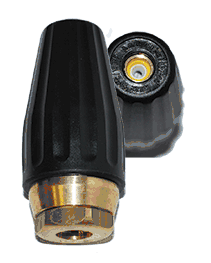
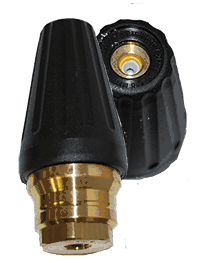
Idk-4.0 Dirt Killer No...
Regular price $274.95Regular priceper




![Kra?nzle Idk 3.5 Dirt Killer Nozzle 4700 PSI [orange] - Rotating Turbo Nozzles](http://sunbritesupplymd.com/cdn/shop/files/03968_cb75583b-92c4-46a5-a07e-a9e7bc1e7573.webp?v=1774230969&width=533)




![Kra?nzle Idk-4.0 Dirt Killer Nozzle 4700psi[gray] - Rotating Turbo Nozzles](http://sunbritesupplymd.com/cdn/shop/files/06697_a647e7b2-3410-4633-b70a-2e8f421f1693.webp?v=1774230965&width=533)
Rotating Turbo Nozzles
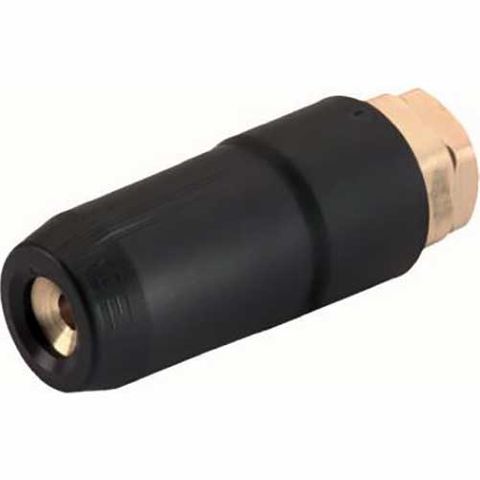
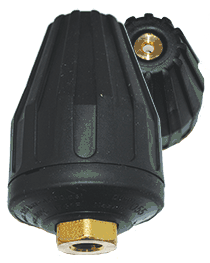
A rotating turbo nozzle is the cheapest speed upgrade you can bolt onto a pressure washer. It spins a zero-degree jet in a tight cone, so concrete that took three passes with a fan tip comes clean in one. We size them to your machine's GPM and PSI over the phone at 301-519-9274, and we stock repair kits so a good nozzle does not become landfill.
How a Turbo Nozzle Cuts Cleaning Time
Inside the housing, water drives a small rotor that whips a zero-degree orifice around at roughly 3,000 RPM. The result on the surface is a cone of pinpoint impact 4 to 8 inches across. You keep the hitting power of a straight jet but cover the width of a 25-degree fan, and on flatwork that routinely cuts cleaning time close to half. The jet lands as thousands of tiny hammer strikes per minute instead of one steady line, which is why turbo nozzles peel up gum shadows, mildew crust, and tire marks that a fan tip just polishes.
The parts doing that work are a ceramic seat and a spinning insert, and they live a hard life. Grit in your water eats them, which is why we tell every buyer to run an inline filter ahead of an expensive rotating nozzle. A $55 filter protecting a $200 to $400 nozzle is easy math.
Matching a Rotating Nozzle to Your Machine
Three numbers decide the fit. First, orifice size. Turbo nozzles are sized like standard tips, so a 4 GPM at 4,000 PSI machine typically takes a 4.0 to 4.5 orifice. Too large an orifice and your pressure falls off. Too small and you strain the unloader and lose flow. Second, pressure rating. The nozzle's max PSI must sit above your machine's output, and a little headroom extends seat life. Third, temperature. Standard rotating nozzles are cold water parts. If you run a hot water rig, buy a nozzle rated for it, like the 212-degree Suttner ST-457 series. Cook a cold-rated rotor once and it is done.
Where a Turbo Nozzle Belongs, and Where It Does Not
Use one on concrete, exposed aggregate, brick pavers, stone, and rusty steel. Keep it off wood, vinyl siding, stucco, painted surfaces, vehicles, and soft mortar joints. That spinning zero-degree jet will fur up a deck board or carve lines in soft brick in seconds. On sound concrete, keep the nozzle moving and hold it 8 to 12 inches off the surface until you see how the slab reacts. For big open slabs, a surface cleaner is faster and leaves no stripe marks. The turbo nozzle earns its keep on edges, steps, curbs, and spot work where the surface cleaner cannot reach.

Turbo Nozzle Lineup by Pressure Rating
| Nozzle | Rated PSI | Notes | Price |
|---|---|---|---|
| Mecline TPL Turbo | 4,000 | Budget workhorse for residential rigs | $43.84 |
| PA UR32 Red | 5,100 | Mid-range contractor pick | $75.33 |
| General Pump Rotomax | Varies by orifice | Multiple orifice sizes, call to match | $88.24 |
| Suttner Rotary Nozzle | 5,000 | German-built, rebuildable | $110.68 |
| Dirt Killer QC Nozzle | 3,200 | Quick connect, small machine friendly | $129.68 |
| Suttner ST-457 9.0 | 6,000 | Hot water rated to 212 F | $139.99 |
| Rotojet Nozzle | 5,800 | High pressure industrial work | $146.99 |
| Hydra-Flex Aqua-Rocket 4.0 | 5,000 | Tungsten carbide seat, long service life | $225.00 |
| ST-457 Repair Kit | n/a | Rebuild instead of replace | $60.28 |
| GP 101146 Inline Filter | n/a | Protects the rotor from grit | $54.99 |
Aqua Rocket models also come in 4.5, 5.0, 5.5, and 6.0 orifice sizes for higher flow machines. Prices move, so check the product page for current numbers.

From the Field
The number one turbo nozzle complaint at our counter is a nozzle that quit spinning or spins lazy. Nine times out of ten the culprit is debris scoring the seat or a rotor worn from sandy water, not a bad nozzle. That is exactly why we carry the inline filter and the ST-457 repair kit. A $60 kit brings a $140 nozzle back to life. Two habits stretch the life of any rotating nozzle. Point it down and pull the trigger before it touches the work, because starting the rotor against the surface hammers the seat. And never let it drop on concrete, since one hard fall can chip the ceramic and turn your tight cone into a wobbling squiggle. If your pattern ever changes shape mid-job, stop and inspect before you blame the pump.
Related Nozzle and Concrete Gear
- Turbo nozzle repair kits
- Inline filters to protect the rotor
- Standard spray nozzles and quick connect tips
- 1/4 MEG nozzles and 1/8 MEG nozzles
- Surface cleaners for big flatwork
- Sewer jetter nozzles
- Lances and wands
- Concrete cleaning equipment
- See it in person at our Gaithersburg pressure washer store
Frequently Asked Questions
What size turbo nozzle do I need for my pressure washer?
Match the orifice to your GPM and PSI the same way you size a standard tip. A 4 GPM, 4,000 PSI machine usually lands on a 4.0 to 4.5 orifice, and the nozzle's pressure rating should sit above your machine's output. Give us your machine numbers and we will size it in one call.
Is a turbo nozzle safe on wood or vinyl siding?
No. The spinning zero-degree jet shreds wood fibers and can cut through vinyl and paint. Keep turbo nozzles on concrete, brick, stone, and steel, and use lower pressure fan tips or soft wash methods on everything else.
Why did my turbo nozzle stop spinning?
Usually grit. Sand and sediment score the ceramic seat and wear the rotor until it drags. Flush the nozzle, check for debris, and if the seat is worn, a repair kit fixes rebuildable models like the Suttner ST-457. An inline filter prevents most of this.
Can I run a turbo nozzle on a hot water pressure washer?
Only if the nozzle is rated for it. Hot rated models like the ST-457 series handle up to 212 degrees. Put a cold-only rotating nozzle on a hot rig and the internals fail fast.
How much faster is a turbo nozzle than a standard tip?
On heavy buildup, figure close to twice the production. The rotating jet covers a 4 to 8 inch cone with full pinpoint impact, so you clean the width of a fan pattern at the strength of a straight jet.
Should I buy a turbo nozzle or a surface cleaner for concrete?
Both, honestly, but for different jobs. A surface cleaner wins on large open slabs because it is faster and leaves no zebra striping. The turbo nozzle handles edges, steps, spot stains, and anywhere the deck of a surface cleaner cannot fit.
Are expensive turbo nozzles worth it?
If you run one daily, yes. Premium models like the Hydra-Flex Aqua Rocket use tungsten carbide wear parts that outlast standard ceramic several times over. A weekend user is well served by a $44 to $110 nozzle plus an inline filter.