
Collection: Strainers
Strainers
-
5000PSI FILTER 1/4MPT ...
Regular price $22.45Regular priceper -
Weighted Plastic Chemi...
Regular price $3.28Regular priceper -
Tf-16 1" Slotted ...
Regular price $30.51Regular priceper -
Tf-c 1/4" Slotted...
Regular price $20.99Regular priceper -
Tf-12 3/4" Slotte...
Regular price $20.99Regular priceper -
Tf-08 1/2" Slotte...
Regular price $20.99Regular priceper -
Premium 5000PSI Filter...
Regular price $14.18Regular priceper -
Screen SS 50 Mesh for ...
Regular price $12.92Regular priceper -
Clear Bowl Repl. for 1...
Regular price $32.87Regular priceper -
ZMFIL Green Cap Water ...
Regular price $44.93Regular priceper -
Clear Bowl Water Filte...
Regular price $82.53Regular priceper -
Gasket Buna for 1/2&qu...
Regular price $2.18Regular priceper -
O-ring for Green Cap W...
Regular price $1.82Regular priceper -
Clear Bowl Water Filte...
Regular price From $57.04Regular priceper -
Premium 5000PSI Filter...
Regular price $18.79Regular priceper -
Screen SS 50 Mesh for ...
Regular price $19.10Regular priceper -
Clear Bowl Repl. for 1...
Regular price $69.02Regular priceper -
Screen SS 80/20 Mesh f...
Regular price $32.12Regular priceper -
Screen SS 80 Mesh for ...
Regular price $13.99Regular priceper -
Clear Bowl Water Filte...
Regular price $67.99Regular priceper -
Scaltrol Sc-50 Water T...
Regular price $315.99Regular priceper -
Scaltrol Sc-50 Water T...
Regular price $295.01Regular priceper -
White Bowl Water Filte...
Regular price From $35.75Regular priceper -
White Bowl Water Filte...
Regular price From $31.32Regular priceper -
Gasket Buna for 1"...
Regular price $2.96Regular priceper -
Gp 2640029 Repl. 50 Me...
Regular price $10.02Regular priceper -
Gp 2640032 Repl. 80 Me...
Regular price $12.92Regular priceper -
Gp 2640033 Repl. 50 Me...
Regular price $13.36Regular priceper -
Gp 2660325 Repl. Clear...
Regular price $21.69Regular priceper -
Gp 2701077 O-ring for ...
Regular price $1.65Regular priceper -
Gp 2701078 O-ring for ...
Regular price $2.27Regular priceper -
Gp Clear Bowl Water Fi...
Regular price $21.99Regular priceper -
Water Filter Blue Cap ...
Regular price $29.71Regular priceper -
4' Clear Vinyl Hos...
Regular price $6.54Regular priceper -
Heavy Weight Brass Che...
Regular price $10.92Regular priceper -
Repair Kit for 5000PSI...
Regular price $10.95Regular priceper -
Scaltrol Rsc-100 Repla...
Regular price From $164.07Regular priceper -
White Bowl Water Filte...
Regular price $72.20Regular priceper -
White Bowl Water Filte...
Regular price $57.35Regular priceper -
5000PSI Filter 1/4FPT ...
Regular price $22.45Regular priceper -
Weighted Chemical Stra...
Regular price $3.74Regular priceper -
Chemical Strainer Chro...
Regular price $7.11Regular priceper -
Zf2 Chemical Strainer ...
Regular price $10.95Regular priceper -
Screen SS 80/20 Mesh, ...
Regular price $30.27Regular priceper -
Screen S.s. 50 Mesh fo...
Regular price $23.33Regular priceper -
Screen SS 50 Mesh for ...
Regular price $15.92Regular priceper -
Nylon Top for 1 1/2&qu...
Regular price $20.99Regular priceper -
Nylon Top for 1 1/4&qu...
Regular price $19.50Regular priceper -
Nylon Top for 1" ...
Regular price $16.34Regular priceper -
White Bowl Repl. for 1...
Regular price $23.12Regular priceper -
White Bowl Repl. for 1...
Regular price $11.95Regular priceper -
White Bowl Water Filte...
Regular price From $47.53Regular priceper -
Y Strainer 1" Bra...
Regular price $32.92Regular priceper -
Y Strainer 3/4" B...
Regular price $25.95Regular priceper -
Y Strainer 1/2" B...
Regular price $18.95Regular priceper -
St-35r Suction Line St...
Regular price $27.99Regular priceper -
Tank Screen 1/4 FPT, 5...
Regular price From $4.39Regular priceper -
Tank Screen 3/4 FPT, 5...
Regular price $5.67Regular priceper







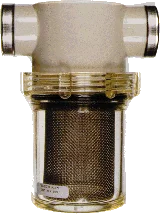


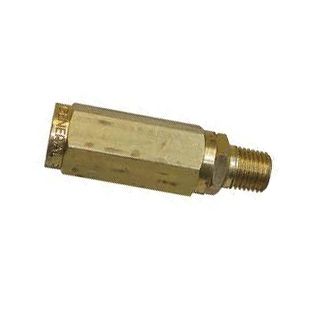



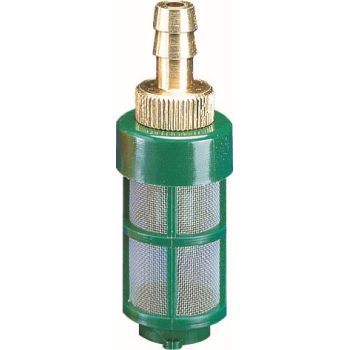


Pressure Washer Strainers and Inlet Filters
Sand kills pumps slowly and quietly, one pass through the check valves at a time. A pressure washer inlet strainer costs about as much as lunch and catches the grit before it reaches your packings. We carry General Pump clear bowl filters, replacement screens in 50 and 80 mesh, and chemical line strainers. Not sure what your setup needs? Call 301-519-9274 and describe your water source.
How to Pick an Inlet Strainer That Actually Protects the Pump
Three specs decide it: line size, mesh, and flow capacity. Line size is easy, match the filter to your inlet plumbing, 1/2" and 3/4" for garden hose rigs, 1" to 1 1/2" for tank-fed and high flow machines. Mesh takes one minute to understand. The number counts screen openings per inch, so higher mesh means finer filtering. Pump makers generally want 50 to 80 mesh at the inlet. A 50 mesh screen stops fine sand and holds more debris before it chokes. An 80 mesh screen catches smaller grit but needs cleaning more often. City water on a clean hose can run 50 mesh forever. Well water, tanks, and hydrant feeds earn the 80.
Flow capacity is the spec everyone skips. Size the filter for about double your pump's GPM, so a 5 GPM pump wants a filter rated near 10 GPM. Run them one to one and the screen only has to load up a little before the pump starts starving. A starving pump cavitates, and cavitation rattles check valves and pits plungers faster than dirty water ever will.
Why Clear Bowl Filters Are Worth the Few Extra Dollars
A clear bowl shows you the screen without tools. Glance at it during setup, and if the bowl looks like a snow globe you clean it before the day starts. Steel-bodied strainers work fine, but nobody opens them until pressure already dropped, and by then the pump has been pulling against a plugged screen for who knows how long. The GP clear bowl series also rebuilds cheap. Screens run $5 to $14, bowls and O-rings are stocked separately, so a cracked bowl does not mean a new filter.

Strainer and Screen Lookup
| Part | Line Size | Mesh | Price |
|---|---|---|---|
| GP Clear Bowl Filter | 1/2" | 50 | $18.15 |
| GP Clear Bowl Filter | 1/2" | 80 | $21.99 |
| GP Clear Bowl Filter | 3/4" | 50 | $20.00 |
| Blue Cap Filter, FGH x 1/2" MPT | Garden hose | Screen | $29.71 |
| GP Clear Bowl Filter | 1" | 80 | $30.00 |
| White Bowl Filter | 1 1/4" | Screen | $35.25 |
| GP Clear Bowl Filter | 1 1/2" | 50 | $61.00 |
| GP Replacement Screen | 1/2" and 3/4" | 80 | $4.85 |
| GP Replacement Screen | 1/2" and 3/4" | 50 | $10.02 |
| GP Filter Bowl O-Ring | 1/2" and 3/4" | n/a | $1.65 |
All screens above are stainless. Call to confirm stock before a long drive.
Tank-Fed Rigs Need More Than a Screen
If you draw from a buffer tank, the strainer is only half the setup. The suction side runs under vacuum, and a standard garden hose will suck flat right when the screen starts loading up. Use ribbed, non-collapsible suction hose between tank and pump, keep the run short, and step up to a 1" or larger filter body even on a 4 GPM machine. Every fitting on that side is a possible air leak, and air on the suction side reads exactly like a clogged strainer: surging, rattling, weak pressure.
From the Field
The replacement screens in this collection outsell complete filter assemblies, and that is exactly how it should work. Buy the housing once, swap the $5 screen when it wears. What should not happen is the other pattern we see: a customer rebuilds a pump, skips the $20 filter, and comes back the next season for another seal kit with sand embedded in the old packings. Grit is the cheapest problem on your rig to prevent and the most expensive one to ignore. One more counter tip: when you clean a screen, look at what is in it. Rust flakes point at old galvanized plumbing or a rusty tank. Sand points at the well. What the screen catches tells you how often to check it.
Related Collections
- All water filters and inline filters
- Chemical strainers for pickup lines
- General Pump water filter parts
- Hypro filters and green cap water filters
- Garden hose pump inlets with filters
- Chemical injectors, the part your chem strainer protects
- Pressure washer pumps, the part your inlet strainer protects
- In the area? Visit our Gaithersburg store and we will match screens at the counter
Frequently Asked Questions
What mesh strainer do I need for a pressure washer inlet?
Most pump manufacturers call for 50 to 80 mesh at the inlet. Use 50 mesh on clean city water and 80 mesh on wells, tanks, and hydrants where finer grit shows up. Finer than 80 clogs too fast for inlet duty on most rigs.
What is the difference between mesh and micron ratings?
Mesh counts openings per inch of screen, microns measure the particle size that gets through. Rough guide: 60 mesh passes about 250 microns, which is fine sand. Higher mesh number means smaller particles get caught.
Where should the inlet strainer be installed?
On the supply line right before the pump inlet, after the hose or tank outlet. Add a second strainer on the chemical pickup line to keep soap crystals and debris out of the injector check valve.
How often should I clean a pressure washer inlet filter?
Check it weekly on city water and daily when drawing from tanks or wells. Clean it any time pressure surges or drops. A clear bowl makes this a five second glance instead of a teardown.
What size water filter does my pump need?
Match the port size to your plumbing, then check the flow rating. Aim for a filter rated about twice your pump's GPM so a partly loaded screen still feeds the pump fully.
My machine surges even with a new filter. Why?
Look for a collapsed suction hose, an air leak at a suction-side fitting, or a screen finer than the water source can support. Surging means the pump is starving, and the filter is only one suspect on that list.
Do you stock replacement screens and bowls?
Yes. Screens in 50 and 80 mesh for 1/2" through 1 1/2" GP filter bodies, plus bowls and O-rings. Call 301-519-9274 with your filter size and we will pull the parts.