
Collection: Sewer Jetter Nozzles
Sewer Jetter Nozzles
-
ST-49 1/4" FPT Se...
Regular price $49.16Regular priceper -
Sewer Nozzle 1/4"...
Regular price $15.24Regular priceper -
S.S. SEWER NOZZLE 1/4 ...
Regular price $16.20Regular priceper -
S.S. SEWER NOZZLE 3/8 ...
Regular price $17.14Regular priceper -
S.S. SEWER NOZZLE 3/8 ...
Regular price $18.18Regular priceper -
S.S. SEWER NOZZLE 1/4 ...
Regular price $14.24Regular priceper -
S.S. Sewer Nozzle 1/8 FPT
Regular price $13.18Regular priceper -
S.S. SEWER NOZZLE 1/4 ...
Regular price From $16.20Regular priceper -
S.S. SEWER NOZZLE 1/4 ...
Regular price From $11.92Regular priceper -
S.S. SEWER NOZZLE 1/4 ...
Regular price From $16.20Regular priceper -
S.S. SEWER NOZZLE 3/8 ...
Regular price $19.21Regular priceper -
St49 Sewer Nozzle Rota...
Regular price $44.18Regular priceper











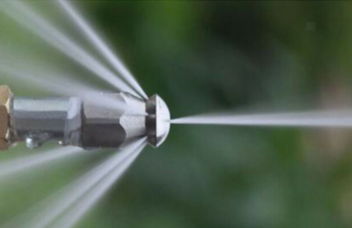


Sewer Jetter Nozzles
A sewer jetter nozzle turns your pressure washer into a drain machine, but only if the orifice size matches your pump. Run the wrong number and the hose crawls, the engine bogs, or the clog wins. Sun Brite Supply carries stainless jetter nozzles in 1/8, 1/4, and 3/8 inch threads plus Suttner rotating heads, and we size them to your machine over the phone. Call 301-519-9274 with your GPM and PSI before you order.
How a Sewer Jetter Nozzle Actually Works
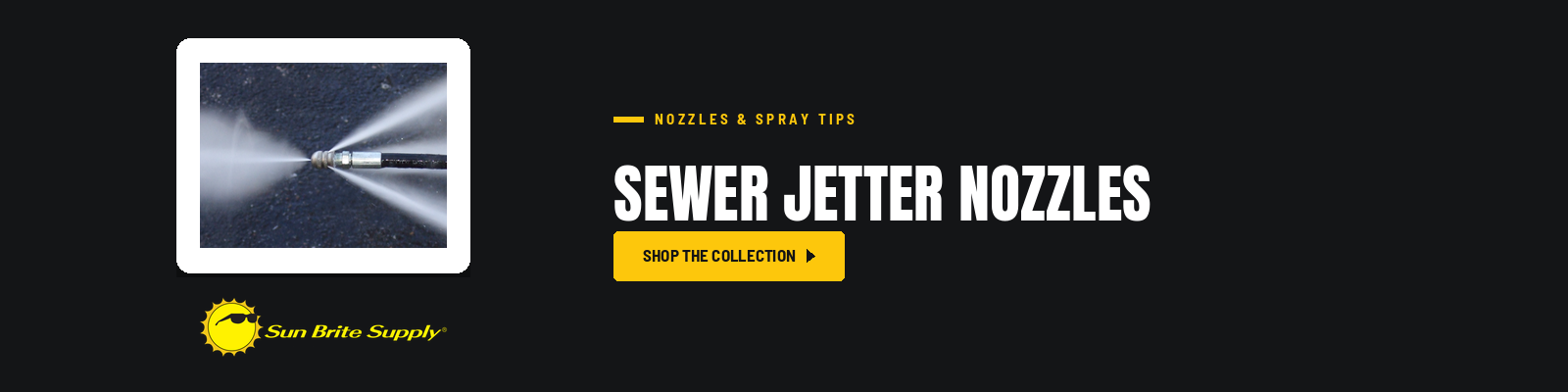
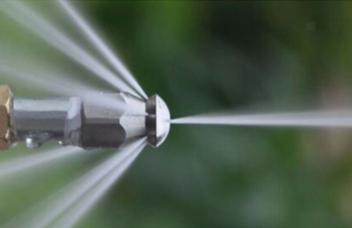
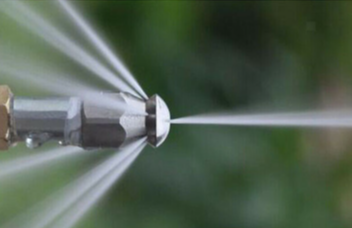
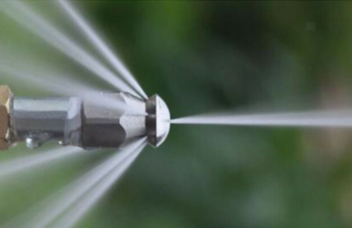
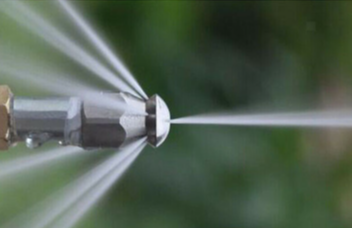
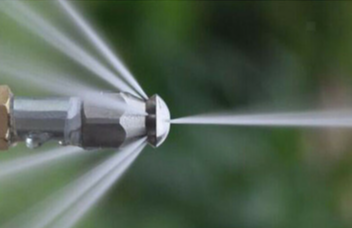
The rear jets do the real work. They fire backward at an angle, which drives the hose up the pipe and flushes cut debris back toward you and the drain opening. A forward jet, when the nozzle has one, punches a pilot hole through soft blockages so the nozzle can keep moving. You feed the hose in until you pass the blockage, then pull back slowly, around 10 to 20 feet per minute, and let the rear jets scour the pipe wall on the way out. Work from a downstream access point toward the clog whenever you can, so the loosened material has somewhere to go.
Sizing the Nozzle to Your Machine
The Orifice Number Is Everything
Each of our stainless nozzles carries a size number, from #4.5 up to #12.0. That number describes the combined orifice area, the same rating system used on spray tips. Match it to what your pump can feed. A 4 GPM at 4,000 PSI machine runs a #4.5 or #5.5 well. Machines in the 5.5 to 8 GPM range step up to #6.5 or #8.0. Save the #12.0 for big flow jetters. Go too large and pressure collapses at the nozzle. Go too small and the machine goes into bypass while you starve the jets of flow.
Then Subtract the Hose
Jetting runs use 100 to 200 feet of small diameter hose, and friction eats pressure the whole way. If your calculated size lands between two nozzles, take the smaller one. That is also why 1/8 inch nozzles matter: smaller thread, smaller hose, and they snake through 1.5 to 3 inch house drains where a 3/8 setup will not go. Use 1/4 inch nozzles on mid size lines and 3/8 on mainline work.
Fixed or Rotating
Fixed jet nozzles are the workhorses for sediment, sludge, and soft blockages. A rotating head like the Suttner ST-49 spins its jets around the full pipe wall, which cleans grease rings and biofilm a fixed pattern leaves striped. Rotating nozzles cost about three times more and have wear parts, so most contractors carry one rotating head and a pocket of fixed nozzles in each size.

Jetter Nozzle Quick Reference
| Nozzle | Thread | Size / Orifice | Good Match | Price |
|---|---|---|---|---|
| S.S. Sewer Nozzle 1/8 FPT | 1/8" | Small drain lines | Sink and tub drains, 1.5 to 3 inch pipe | $13.18 |
| S.S. Sewer Nozzle 1/8 FPT #5.5 | 1/8" | #5.5, 0.8mm | 4 to 5 GPM machines, small hose | $11.92 |
| Ball Type Sewer Nozzle 1/4" 4.0 | 1/4" | #4.0 | 4 GPM rigs, glides past offsets | $15.24 |
| S.S. Sewer Nozzle 1/4 FPT #4.5 | 1/4" | #4.5, 0.7mm | 4 GPM at 4,000 PSI machines | $16.20 |
| S.S. Sewer Nozzle 1/4 FPT #5.5 | 1/4" | #5.5, 0.8mm | 4 to 5.5 GPM machines | $11.92 |
| S.S. Sewer Nozzle 1/4 FPT #8.0 | 1/4" | #8.0, 1.0mm | 5.5 to 8 GPM machines | $16.20 |
| S.S. Sewer Nozzle 3/8 FPT #6.5 | 3/8" | #6.5, 0.9mm | 5.5 GPM rigs on 3/8 jetter hose | $18.18 |
| S.S. Sewer Nozzle 3/8 FPT #12.0 | 3/8" | #12.0, 1.2mm | 8 GPM and dedicated jetters | $17.14 |
| Suttner ST-49 Rotating 1/8 FPT | 1/8" | #5.5 rotating | Grease and scale in small lines | $44.18 |
| Suttner ST-49 Rotating 1/4 FPT | 1/4" | Rotating head | Full wall scour, grease lines | $49.16 |
Availability shifts week to week on these, so call 301-519-9274 to confirm what is on the shelf before you head over.

From the Field
Two lessons keep repeating at our counter. First, guys buy one nozzle and expect it to do every drain in the county. The contractors who make money jetting carry a small kit: a ball type or penetrator for punching blockages, a flusher for the pull back pass, and a rotating head for grease calls, in the thread size their hose runs. The whole kit costs less than one drain call pays. Second, worn jets sneak up on you. Stainless orifices erode as gallons go through them, and a nozzle that used to pull hose briskly starts feeling lazy. If your jetter hose stops climbing the pipe like it did last season, measure nothing and replace the nozzle. At eleven to eighteen dollars, it is the cheapest fix in drain work. And keep the trigger closed until the nozzle is inside the pipe. A jetter nozzle whipping loose above grade will put someone in the hospital.
Related Collections
- Sewer jetting hose
- Drain and sewer cleaning equipment
- Hydro excavating
- All nozzles and rotating nozzles
- Nozzle holders and nozzle accessories
- Quick connects and hose fittings
- Turbo nozzle repair kits
- Need hands on help? Visit our Gaithersburg store
Frequently Asked Questions
Can I use my pressure washer as a sewer jetter?
Yes. Add a jetter hose and a nozzle sized to your pump and a 4 GPM machine handles most residential drain lines. More flow cleans faster and pulls hose harder, so bigger machines earn their keep on long mainline runs.
What size jetter nozzle fits a 4 GPM 4000 PSI machine?
Start with a #4.5, or a #5.5 if you run shorter hose lengths. Long runs of 1/4 inch hose burn pressure to friction, and sizing down one step keeps working pressure at the jets.
Why will the nozzle not pull the hose up the pipe?
Three usual causes. The orifice number is too big for your flow, the rear jets are worn oversize, or the hose is snagged on a fitting or offset. A ball type nozzle helps glide past rough joints, and a fresh nozzle restores thrust more often than people expect.
Do I need a forward jet?
For blockages, yes, the forward jet opens a path so the nozzle can advance. For routine flushing of an open line, a rear jet only nozzle puts all its energy into propulsion and wall cleaning instead of spraying ahead.
When is a rotating sewer nozzle worth it?
Grease, soap scum, and biofilm. A fixed pattern leaves stripes of residue between jets, while a rotating head like the Suttner ST-49 sweeps the full pipe circumference. Keep a fixed nozzle for cutting through the blockage first.
What thread size do sewer jetter nozzles use?
They match your jetter hose end: 1/8 FPT on small drain hoses, 1/4 FPT on standard jetter hose, and 3/8 FPT on mainline hose. The thread does not change the spray, it just has to match what you own.