
Collection: Lances
Lances
-
Pa Yg4500s Linear Spra...
Regular price $44.99Regular priceper -
Side Handle for 1/4&qu...
Regular price $5.86Regular priceper -
BE Ext Wand M22 x 3/4&...
Regular price $12.29Regular priceper -
Anti-Fatigue Belt for ...
Regular price $19.99Regular priceper -
Spray Gun Replacement ...
Regular price $156.49Regular priceper -
42" Steel Lance W...
Call For A Quote (301) 519-9274 -
Lance, Front Assy, 24&...
Regular price $26.49Regular priceper -
144" Alum Lance W...
Regular price $44.14Regular priceper -
Adjustable Foam Lance ...
Regular price $49.84Regular priceper -
Aluminum 84" Lanc...
Regular price $20.86Regular priceper -
Stainless Steel Dual L...
Regular price $18.25Regular priceper -
Anti-Fatigue Telescopi...
Regular price $39.00Regular priceper -
Ybrv5325 Balanced Reli...
Regular price $334.97Regular priceper -
St56 Roll Over Nozzle ...
Regular price $44.70Regular priceper -
Steel Dual Lances for ...
Regular price $88.68Regular priceper -
Gutter Adapter For Tel...
Regular price $14.99Regular priceper -
Steam Lance 44" L...
Regular price $487.72Regular priceper -
Steam Lance 3/8" ...
Regular price $307.25Regular priceper -
Steel Dual Lances for ...
Regular price $44.20Regular priceper -
Stainless Steel Wands ...
Regular price $36.53Regular priceper -
Vent Grip Stainless St...
Regular price From $47.14Regular priceper -
Gladiator Vent Grip Ch...
Regular price From $14.99Regular priceper -
Gladiator Oval Stainle...
Regular price $50.48Regular priceper -
Aluminum Uninsulated W...
Regular price From $18.22Regular priceper -
Deluxified 40" S....
Call For A Quote (301) 519-9274 -
Deluxified 40" Zi...
Call For A Quote (301) 519-9274 -
Front Lance W/M22 Pres...
Regular price $36.54Regular priceper -
Large Lock for Outer B...
Regular price $14.97Regular priceper -
Small Lock for Inner B...
Regular price $9.98Regular priceper -
12" Gutter Cleani...
Regular price $20.62Regular priceper -
15" Ventilated Gr...
Regular price $15.46Regular priceper -
Deluxified Suttner St-...
Regular price From $66.99Regular priceper -
Gladiator Oval Molded ...
Regular price From $18.48Regular priceper -
Side Handle (c-clamp S...
Regular price $4.70Regular priceper -
St-002 Molded Grip 36&...
Regular price $41.95Regular priceper -
St-002 Molded Grip 47&...
Regular price $30.99Regular priceper -
St-007 Molded Grip 36&...
Regular price $14.95Regular priceper -
St-007 Molded Grip 24&...
Regular price $12.99Regular priceper -
St-007 Molded Grip 36&...
Regular price $13.99Regular priceper -
St-007 Molded Grip 47&...
Regular price $16.99Regular priceper -
St-007 Molded Grip 59&...
Regular price $29.99Regular priceper -
St-3600 S.s. Lance 1/2...
Regular price $229.99Regular priceper -
St-53 Complete Replace...
Regular price $52.95Regular priceper -
St-85 Push & Pull ...
Regular price $209.28Regular priceper -
Suttner ST-007 79"...
Regular price $45.95Regular priceper -
St-009 Vent Grip 24&qu...
Regular price $40.95Regular priceper -
Suttner St-009 Vent Gr...
Regular price $30.99Regular priceper -
Suttner St-009 Vent Gr...
Regular price $43.24Regular priceper -
Suttner St-53 Dual Lan...
Regular price $88.95Regular priceper -
Suttner St-54 Dual Lan...
Regular price $63.99Regular priceper -
Telescopic Poles for H...
Regular price $72.47Regular priceper -
Wand Pipe 36" Sta...
Regular price $42.99Regular priceper -
Wand Pipe 47" Sta...
Regular price $30.53Regular priceper -
Wand Pipe 59" Sta...
Regular price $53.99Regular priceper -
Wand Pipe 79" Sta...
Regular price $69.99Regular priceper -
Zzdbl HD Dual Lance O-...
Regular price $18.76Regular priceper -
Wand Pipe 12" Chr...
Regular price From $8.99Regular priceper -
St-002 Molded Grip 24&...
Regular price $18.99Regular priceper -
McCAULEY'S SPRAY-F...
Regular price $170.95Regular priceper




















Pressure Washer Lances and Wands
The right lance puts distance between your hands and the surface, and distance is safety when you are holding 4,000 PSI. Sun Brite Supply stocks pressure washer lances from 18 inch shorties to 24 foot telescoping wands, in aluminum, steel, and stainless. Order online, or call 301-519-9274 and tell us what you are trying to reach. We will match the lance, the threads, and the nozzle in one order.
How to Pick a Pressure Washer Lance
Three questions settle it. How high or deep do you need to reach? Hot water or cold? And what threads does your gun have? Most guns and lances connect with 1/4 inch threads or M22 fittings, and quick connect versions save you a wrench every time you swap. Get those three answers right and the rest is preference.
Length Does the Work Your Ladder Used to Do
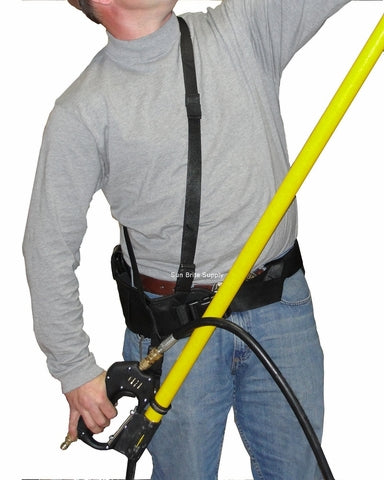
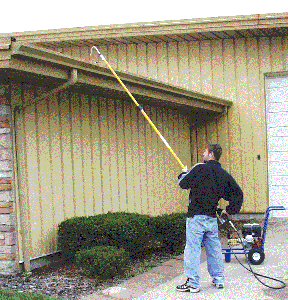
A standard 36 to 42 inch lance covers flatwork, siding you can reach, and general rinse duty. Step up to a 72 or 84 inch lance and you can hit soffits, gutters, and second story trim with both boots on the ground. The 144 inch and telescoping models reach two and three stories up. Climbing a ladder with a live trigger gun is how washers get hurt, because the recoil at high pressure can push you right off the rungs. A longer lance costs less than one ER visit, and an anti-fatigue belt takes the weight off your arms on all-day telescoping work.
Material and Grip Choices
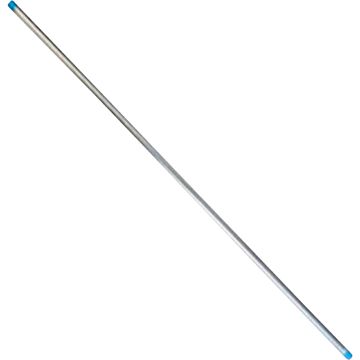
Aluminum lances are light, cheap, and fine for cold water residential and light commercial work. Steel with a molded grip takes more abuse and stays affordable. Stainless costs the most and shrugs off chemicals and hot water, which is why hot water crews and fleet washers standardize on it. On grips: a molded grip is solid plastic and will pass heat through eventually, while a vented grip floats around the pipe and stays cooler. If you run a hot water machine, treat the vented grip as mandatory. Rate every lance for your machine's pressure and temperature, not just its fitting size.
Single vs Dual Lance
A single lance sprays whatever the machine sends it. A dual lance runs two parallel pipes with a valve at the grip, so you can flip between high pressure rinse and low pressure soap without walking back to the machine. Downstream injectors only draw soap at low pressure, so the dual lance is the tool that makes one-man house washing move fast. If you soap and rinse all day, it pays for itself the first week.
Lance and Wand Lineup
| Lance | Length | Material | Good For | Price |
|---|---|---|---|---|
| BE extension wand, M22 x 3/4" MNPT | Standard | Steel | M22 gun hookups | $12.29 |
| Aluminum 84" lance | 84" | Aluminum | Gutters and soffits from the ground | $20.86 |
| 42" steel lance with molded grip | 42" | Steel | Everyday flatwork and siding | $24.59 |
| Front lance assembly, 24' telescoping wand | Replacement section | Aluminum | Rebuilding a tele-wand tip | $26.49 |
| 144" aluminum lance with quick connects | 144" | Aluminum | Second story work, no ladder | $44.14 |
| Deluxified 40" zinc plated dual lance | 40" | Zinc plated steel | Soap and rinse switching | $74.95 |
| Deluxified 40" stainless dual lance | 40" | Stainless | Hot water and chemical duty | $86.82 |
| Anti-fatigue belt for telescoping wands | One size | Nylon | All-day overhead work | $19.99 |
Stock rotates through the season, so call ahead if you need it today.


From the Field
The parts we sell for telescoping wands tell the real story. Collet assemblies, the little clamps that lock each section, are steady sellers because crews extend the pole, skip the twist-lock, and let the sections slam shut mid-job. Lock each section firmly and the pole lasts years. The other counter lesson: guys buy the longest lance on the wall for a one story house. At 4 GPM the extra length just fights you in the wind. Buy the length the job needs, and if that changes house to house, quick connects let one gun run three lances. Cheaper than one do-it-all pole that does nothing well.
Related Spray Gear Collections
- Pressure washer guns and gun and lance combos
- Dual lances and hot water lances
- Wand accessories
- Nozzles and quick connects
- Swivels to stop hose twist at the gun
- Ball valves for on-the-fly shutoff
- Gutter cleaning attachments
Want to feel the weight difference between aluminum and stainless before you buy? Swing by our Gaithersburg pressure washer store.
Frequently Asked Questions
What is the difference between a lance and a wand?
In practice, nothing. Both names describe the rigid pipe between the trigger gun and the nozzle. Manufacturers use the words interchangeably, so shop by length, material, and thread type instead of the name.
What length lance do I need?
36 to 42 inches handles most ground level work. Go 72 to 84 inches for soffits and single story gutters, and 12 feet or a telescoping wand for second story surfaces. Longer is safer overhead but heavier all day, so match the length to the job.
Will any lance fit my pressure washer gun?
Check the outlet on your gun. Most take 1/4 inch threaded or quick connect lances, and many consumer machines use M22 fittings. Adapters bridge almost any mismatch, and we can identify yours from a photo.
What is a dual lance used for?
Switching between high pressure rinse and low pressure soap at the grip. Downstream injectors only pull chemical at low pressure, so the side valve on a dual lance lets you soap, then rinse, without touching the machine.
Should I buy aluminum, steel, or stainless?
Aluminum for light weight and low cost on cold water work. Steel for a tougher budget lance. Stainless for hot water, daily commercial use, and chemical exposure. Frequency of use decides it more than anything else.
Can a telescoping wand replace a ladder?
For washing, yes, and it should. An 18 or 24 foot telescoping wand reaches most two and three story surfaces from the ground. Trigger recoil on a ladder is a real fall hazard, so keep your feet planted and let the pole do the climbing.
Do I need a special lance for hot water machines?
You need a lance rated for your machine's temperature, and a vented grip that keeps heat off your hand. Stainless construction holds up best at 200 degrees and above. Cold-water-only lances soften and fail early on hot rigs.