
Collection: Pressure Relief Valves
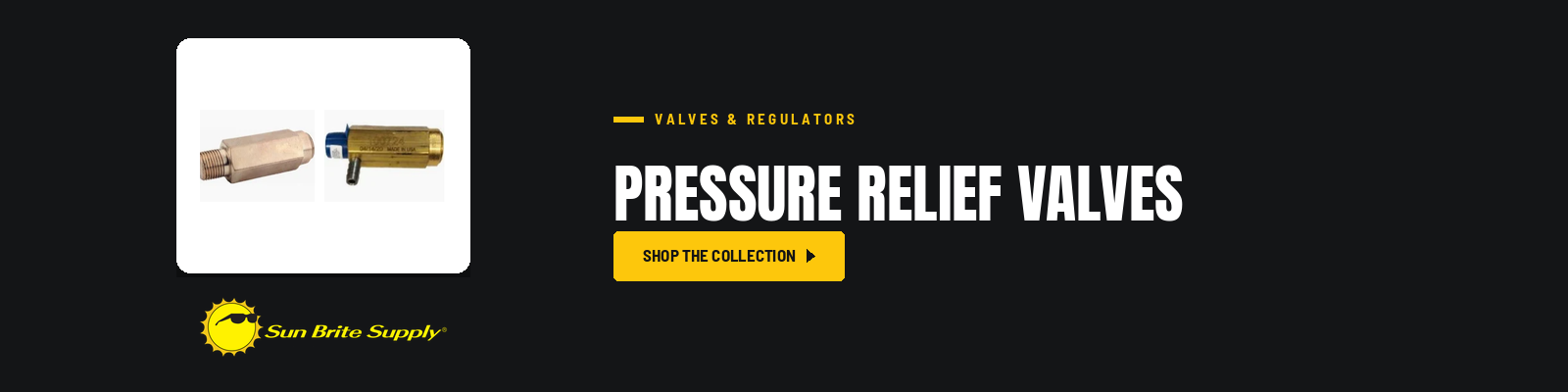
Pressure Relief Valves
-
Giant Pressure Relief ...
Regular price $15.14Regular priceper -
Giant Pressure Relief ...
Regular price $15.14Regular priceper -
Giant Pressure Relief ...
Regular price $15.14Regular priceper -
Giant Pressure Relief ...
Regular price $20.82Regular priceper -
Rv-500 Pressure Relief...
Regular price $29.99Regular priceper -
RV-500 PRESSURE RELIEF...
Regular price $57.94Regular priceper


Pressure Relief Valves for Pressure Washers
A pressure relief valve is the cheap part that saves the expensive ones. When an unloader sticks or a nozzle plugs, pressure climbs in a hurry, and this little valve pops open and dumps water before a hose, fitting, or pump head lets go. Most valves on this page cost less than a tank of gas. Not sure which pressure range matches your pump? Call 301-519-9274 and we will size it while you are on the phone.
How a Pressure Relief Valve Protects Your Pump
Your unloader handles normal trigger-off bypass. The relief valve is the backup that only earns its keep when something has already gone wrong. It threads into the discharge side of the pump with a spring holding a seat closed. When system pressure beats the spring, the seat lifts, water vents out, and pressure falls. The valve opens in proportion to the overpressure and reseats on its own once things settle down, so a brief spike costs you nothing but a squirt of water. Without one, that same spike finds the weakest point in your plumbing, and the weakest point is never cheap.
Pick the Right Pressure Range
Each relief valve covers an adjustment window, and your machine's working pressure needs to land inside it with room to spare. The rule of thumb is to set the relief point roughly 10 percent above working pressure. A 3,000 PSI machine wants a relief setting near 3,300, which puts you in the 2,400 to 3,600 range valve. Set the valve too close to working pressure and it weeps every time you let off the trigger. Set it way above and it protects nothing. Thread size matters too. Small electric and low-flow rigs usually take 1/4 inch MPT, while most gas-powered triplex pump setups use 3/8 inch MPT ports.
| Valve | Adjustment Range | Inlet | Discharge | Price |
|---|---|---|---|---|
| Giant Relief Valve 1/4 MPT | 500-1,200 PSI | 1/4" MPT | Open vent | $15.14 |
| Giant Relief Valve 3/8 MPT | 1,200-2,400 PSI | 3/8" MPT | Open vent | $15.14 |
| Giant Relief Valve 3/8 MPT | 2,400-3,600 PSI | 3/8" MPT | Open vent | $15.14 |
| Giant Relief Valve 3/8 MPT | 3,600-5,000 PSI | 3/8" MPT | Open vent | $20.82 |
| RV-500 Relief Valve | 1,900-3,500 PSI | 3/8" MPT | Open vent | $29.99 |
| AR RV-500 with Hose Barb Outlet | 1,900-3,500 PSI | 3/8" MPT | 1/4" hose barb | $57.94 |
Prices change, and availability moves fast on safety parts. Call before you drive if you need one today.
Installing and Setting the Valve
Thread the valve into an open port on the high-pressure side of the pump, or into a tee downstream of the discharge before any shutoff. To set it, back the adjuster out, bring the machine to working pressure, then turn the adjuster in a full turn at a time until the valve just stops passing water. Add about a half turn past that point and lock it down. Two safety notes worth repeating. Never aim the vent where the discharge can hit a person, because it releases water at full system pressure. And never crank the adjuster to its stop just to kill a drip, since that turns a safety device into a plug.

The hose barb version above is the one to buy when you cannot let the valve spray freely, such as on enclosed trailer rigs. Slip a 1/4 inch line on the barb and route the discharge to the ground or back to your buffer tank.
From the Field
The most common relief valve problem we hear about at the counter is not the valve at all. A relief valve that weeps in bypass is usually reporting an unloader that has started creeping above its set pressure. Rebuild or replace the unloader and the weeping stops. The second most common problem is hard water. Montgomery County water leaves scale on the seat over time, and a scaled seat will not seal. At $15 to $21 for the Giant valves, replacement beats cleaning. Keep a spare in the truck box. It is the cheapest insurance on your whole rig.

Related Valves and Parts
- Unloader valves handle normal bypass duty
- Thermal relief valves protect against heat, not pressure
- Safety relief valves for hot water machines and burners
- Rupture discs for one-time burst protection
- Easy start valves for hard-starting engines
- Check valves and ball valves
- Pressure gauges to verify your settings
- Pressure washer repair parts
Local to Maryland? Stop by our Gaithersburg pressure washer store and we will match the valve to your pump at the counter.
Frequently Asked Questions
What does a pressure relief valve do on a pressure washer?
It opens at a preset pressure and dumps water to protect the pump, hose, and operator from an overpressure spike. It acts as a backup to the unloader and reseats itself once pressure returns to normal.
What is the difference between a relief valve and an unloader valve?
The unloader works every time you release the trigger, routing water into bypass during normal use. The relief valve only opens when pressure exceeds its set point, which should never happen unless the unloader fails or the line blocks.
What PSI range should my relief valve cover?
Pick a valve whose adjustment range includes your working pressure plus about 10 percent. For a 3,000 PSI machine, choose the 2,400 to 3,600 PSI valve and set it near 3,300.
Why does my pressure relief valve keep leaking?
Three usual causes. The set point sits too close to your working pressure, the unloader is creeping above spec in bypass, or mineral scale and debris are holding the seat open. If adjustment no longer stops the leak, replace the valve.
Where should the relief valve be installed?
On the discharge side of the pump, either in a spare head port or a tee before any valve that could block flow. Point the vent away from anywhere a person could be hit, or use a hose barb outlet model to route the discharge.
Is a pressure relief valve the same as a thermal relief valve?
No. A pressure relief valve reacts to pressure and a thermal relief valve reacts to heat, opening around 145 degrees to purge hot bypass water. A well-built rig runs both, and neither substitutes for the other.