
Collection: Hose Barbs
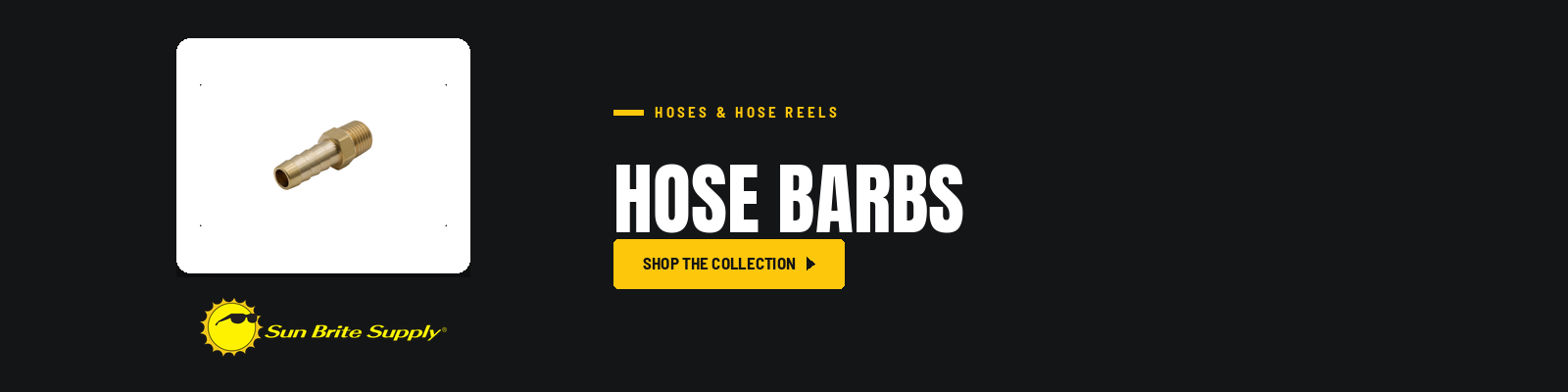
Hose Barbs
-
304 Stainless Steel Ho...
Regular price From $17.16Regular priceper -
Garden Hose Nozzle (co...
Regular price $19.80Regular priceper -
Gilmour Garden Hose Me...
Regular price $6.24Regular priceper -
Brass Hose Barb for Pr...
Regular price From $13.32Regular priceper -
Poly Hosebarb 1.5"...
Regular price $6.24Regular priceper -
Poly Hosebarb 1/2"...
Regular price $1.99Regular priceper -
Poly Hosebarb 1" ...
Regular price $2.58Regular priceper

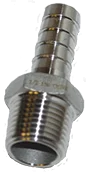


Hose Barb Fittings for Pressure Washing Rigs
Half the plumbing on a wash rig runs on hose barbs. Chemical lines, float tank feeds, bypass returns, downstream injector hose, all of it. Sun Brite Supply carries brass, polypropylene, and stainless hose barb fittings in the sizes contractors actually use. Not sure what your line takes? Call 301-519-9274 and read us the numbers on the old fitting.
How to Size a Hose Barb
The rule is simple and people still get it wrong every week. Barb size matches the inside diameter of your hose, not the outside. A 1/2 inch barb goes into 1/2 inch ID hose. Measure the outside of the hose instead and you will buy a barb one size too big, split the hose forcing it on, and be back at the counter on Monday.
The threaded end is a separate spec. The same 3/8 inch barb can come with 1/4, 3/8, or 1/2 inch pipe thread, so read every fitting as two numbers. A barb listed as 1/2" MPT x 5/8" HB has 1/2 inch male pipe thread on one end and grips 5/8 inch ID hose on the other. The thread size stamped on the package tells you nothing about the barb end. If the fitting is worn or unmarked, put calipers on the widest ridge of the barb and match that number to your hose ID.
Brass, Poly, or Stainless
Material matters more on a wash rig than in general plumbing because of what you pump through the lines.
- Polypropylene is the soft wash standard. It shrugs off sodium hypochlorite and surfactants, costs a couple dollars, and when one finally cracks you swap it without a second thought. Keep poly on low pressure chemical lines only.
- Brass is the workhorse for plain water. Supply hose, float tanks, bypass lines. Bleach attacks brass over time, turning the joint green and brittle, so keep brass off your SH lines.
- Stainless steel handles chemicals and heat both. 304 covers most jobs. 316 has better chloride resistance and is the pick where strong mix sits in the line all day. It costs the most up front and outlasts everything else.
Clamps Do Half the Work
A barb seals because the hose stretches over the ridges. The clamp keeps that stretch tight. Position the clamp over a barb ridge, not behind the last one, and snug it without crushing the hose. On lines that see pulsing flow or pressure above 100 PSI, run two clamps. Stiff hose in cold weather goes on easier after a dip in hot water. And never put a barb on high pressure discharge hose. Anything downstream of the pump at working pressure needs crimped or threaded connections, full stop.

Common Hose Barbs and What They Fit
| Fitting | Material | Size | Best Use | Price |
|---|---|---|---|---|
| Poly Hosebarb 1/2" MPT x 5/8" HB | Polypropylene | 1/2" MPT x 5/8" hose | Downstream injector and chemical lines | $1.99 |
| Poly Hosebarb 1" MPT x 1" HB | Polypropylene | 1" MPT x 1" hose | Buffer tank feed and suction lines | $2.58 |
| Poly Hosebarb 1.5" MPT x 1.5" hose | Polypropylene | 1.5" MPT x 1.5" hose | Tank bulkheads and high volume transfer | $6.24 |
| 304SS Hose Barb 1/2" hose x 3/8" MPT | 304 stainless | 3/8" MPT x 1/2" hose | Chemical lines that also see heat | $12.46 |
| Brass Hose Barb | Brass | Multiple sizes | Plain water supply and bypass plumbing | $13.32 |
| 304 Stainless Steel Hose Barb | 304 stainless | Multiple sizes | All-around chemical duty | $17.16 |
| 316SS Hose Barb 5/8" hose x 1/2" MPT | 316 stainless | 1/2" MPT x 5/8" hose | Strong SH mix, long service life | $22.09 |
Prices move. Call before you drive if you need a specific size today.
From the Field
Most of the barb problems that come through our door are not failed fittings. They are mis-sized ones. The second most common problem is a leak at a barb that has been in service a few years. The fix is usually free: cut an inch off the end of the hose and re-clamp on fresh material, because hose ends relax and lose grip long before the barb wears out. One more habit worth copying from the busy crews: keep a handful of spare poly barbs and clamps in the truck box. A two dollar part should never end a work day.
Related Fittings and Parts
- All pressure washer fittings
- Polypropylene fittings
- Brass pipe fittings
- Stainless steel pipe fittings
- Quick connects
- Chemical hoses
- Chemical injectors
- Garden hose menders
- 90 degree elbows
- Local pickup at our Gaithersburg pressure washer store
Frequently Asked Questions
What size hose barb do I need for my hose?
Match the barb to the inside diameter of the hose. A 5/8 inch ID hose takes a 5/8 inch barb. Do not size off the outside of the hose, and if the hose is unmarked, measure the opening with calipers.
Is the thread size the same as the barb size?
No. The pipe thread and the barb are two separate specs on the same fitting. A 3/8 inch barb might carry 1/4, 3/8, or 1/2 inch NPT threads, so check both numbers before you buy.
Can I put a hose barb on high pressure hose?
No. Barbs belong on low pressure lines like chemical hose, supply hose, and bypass returns. High pressure discharge hose needs crimped or threaded ends rated for the working pressure of your machine.
Which barb material is safe for bleach?
Polypropylene or stainless steel. Sodium hypochlorite corrodes brass at the joint over time. Poly is the cheap answer for soft wash lines, and 316 stainless is the long-life answer where strong mix runs daily.
Why does my hose keep leaking at the barb?
Usually the hose end has stretched and relaxed with age. Cut an inch off the end and re-clamp on fresh hose. If it still leaks, the barb is probably one size small for the hose ID or the clamp is sitting behind the ridges instead of over them.
Should I use one hose clamp or two?
One clamp handles most gravity and suction lines. Use two clamps on anything with pulsing flow or pressure over about 100 PSI, and space them so each sits over a barb ridge.