

80B Blue 2.50 Gph Solid Cone Nozzle
80B Blue 2.50 Gph Solid Cone Nozzle
- Order Policies
- Item# 1364
Couldn't load pickup availability
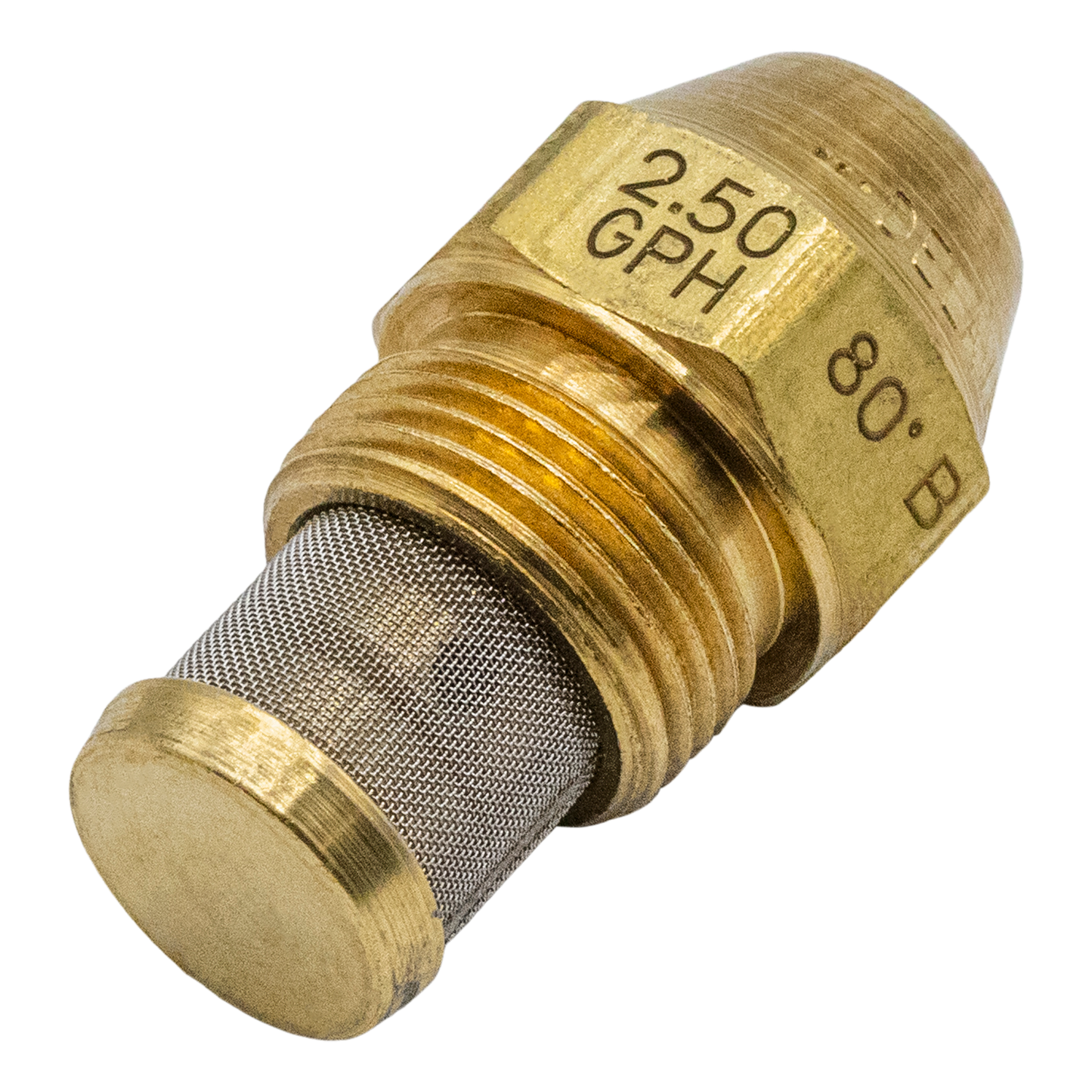
Delavan 80B Solid Cone Fuel Nozzle — 2.50 GPH for Hot Water Pressure Washer Burners
The Delavan 80B 2.50 GPH solid cone fuel nozzle is a direct replacement nozzle for the oil-fired burner on your hot water pressure washer. It atomizes heating oil or diesel fuel into a fine, cone-shaped spray pattern that mixes with air in the combustion chamber to produce the consistent, high-temperature flame that heats your water coil. When this nozzle wears out, clogs, or sprays unevenly, your hot water machine loses efficiency, burns dirty, and eventually stops making hot water altogether.
Fuel nozzles are a scheduled replacement item on every hot water pressure washer. Most manufacturers recommend replacing the burner nozzle every 500 to 1,000 hours of operation — roughly once or twice per season for a full-time contractor. Keeping fresh nozzles on hand means you swap one out in 15 minutes instead of losing a day of hot water work while you track down the right size.
Why the Nozzle Matters More Than You Think
It controls your burner's fuel flow rate. The GPH (gallons per hour) rating of the nozzle determines how much fuel the burner consumes and, by extension, how much heat it produces. A 2.50 GPH nozzle at 100 PSI fuel pump pressure delivers roughly 35,000 BTU per gallon of fuel burned. Go too large and you waste fuel and overheat the coil. Go too small and the burner cannot bring the water up to temperature on high-flow machines.
Spray pattern affects combustion quality. The 80-degree spray angle produces a medium-width cone that matches the combustion chamber geometry on most pressure washer burners. The "B" designation means solid cone — fuel is distributed evenly across the entire cone, not just the outer shell (which would be a hollow cone "A" pattern). Solid cone nozzles produce more stable combustion at varying fuel pressures and are the standard choice for pressure washer burners.
Worn nozzles waste fuel and damage coils. A nozzle that has worn or clogged sprays unevenly. Some areas of the combustion chamber get too much fuel (running rich, producing soot), while other areas get too little (hot spots that stress the coil). Over time, this uneven combustion coats the water coil with carbon deposits that reduce heat transfer and eventually lead to coil failure — a repair that runs $500 to $1,500.
Specifications
- Brand: Delavan
- Flow Rate: 2.50 GPH at 100 PSI fuel pump pressure
- Spray Angle: 80 degrees
- Spray Pattern: B (Solid Cone)
- Thread: Standard 9/16"-24 NEF (fits all standard burner assemblies)
- Fuel Type: No. 2 heating oil, diesel, kerosene
- Color Code: Blue (Delavan's designation for solid cone nozzles)
- Application: Hot water pressure washer burners, hot boxes, and oil-fired water heaters
How to Select the Right Burner Nozzle
Three numbers define a fuel nozzle: the spray angle, the flow rate, and the spray pattern. You need to match all three to your burner's specifications.
Spray angle is determined by your combustion chamber size. 60-degree nozzles produce a narrow cone for small chambers. 80-degree and 90-degree nozzles produce wider cones for larger chambers. Most pressure washer burners use 80 or 90-degree nozzles. Check your burner manual or the old nozzle — the angle is stamped on the body.
Flow rate (GPH) must match the BTU output your burner needs. A general rule: multiply the GPH by 140,000 to get the approximate BTU output. A 2.50 GPH nozzle produces roughly 350,000 BTU — enough to heat water from ambient to 200+ degrees F on machines running 4 to 5 GPM.
Spray pattern is either A (hollow cone), B (solid cone), or W (universal). Solid cone (B) is the standard for pressure washer burners. If you are replacing an existing nozzle, match the letter code on the old one.
How to Replace a Burner Nozzle
Replacing a fuel nozzle takes about 15 minutes and basic hand tools:
Step 1: Shut off the burner and let it cool completely. Disconnect the fuel supply line.
Step 2: Remove the blast tube or burner assembly to access the nozzle. On most pressure washer burners, this involves removing 2 to 4 screws.
Step 3: Unscrew the old nozzle from the nozzle adapter using a nozzle wrench or 5/8" deep socket. The nozzle threads into the adapter at the end of the fuel line.
Step 4: Thread the new nozzle into the adapter by hand, then snug with the wrench. Do not over-torque — you can crack the adapter body.
Step 5: Reassemble the blast tube, reconnect the fuel line, and test fire. Watch for clean ignition, steady flame, and no smoke or dripping.
Pro tip: When you replace the nozzle, also inspect and clean the electrodes, replace the fuel filter, and check the fuel pump pressure. A new nozzle paired with dirty electrodes or low fuel pressure will still burn poorly.
Signs Your Burner Nozzle Needs Replacement
- Burner ignites slowly or requires multiple attempts to fire
- Visible smoke or soot coming from the exhaust stack
- Water temperature is lower than normal at the same flow rate
- Burner flame is yellow or orange instead of clean blue/white
- Carbon buildup on the heating coil or combustion chamber walls
- Increased fuel consumption for the same amount of work
- Fuel dripping from the nozzle tip when the burner is off
Frequently Asked Questions
How often should I replace the burner nozzle?
Every 500 to 1,000 hours of burner run time, or at least once per season for full-time contractors. Even if the nozzle looks fine, the orifice wears microscopically and the spray pattern degrades over time. Preventive replacement is cheaper than a dirty-burn coil failure.
Can I use a different GPH nozzle to get more heat?
Do not increase the GPH beyond your burner's rated capacity. A larger nozzle delivers more fuel than the combustion chamber can efficiently burn, leading to incomplete combustion, soot, and potential coil damage. If you need more heat, you need a larger burner — not a bigger nozzle in an undersized chamber.
What is the difference between A, B, and W spray patterns?
A (hollow cone) concentrates fuel at the edges of the spray cone — good for small, high-intensity burners. B (solid cone) distributes fuel evenly across the entire cone — the standard for pressure washer burners. W (universal) works in most applications but is not optimized for either.
Does it matter what brand of nozzle I use?
Delavan and Danfoss (formerly Hago) are the two major fuel nozzle manufacturers. Both make quality nozzles in the same sizes and patterns. The critical thing is matching the angle, GPH, and pattern — not the brand name.
Can I clean and reuse a clogged nozzle?
You can try soaking it in solvent, but a clogged nozzle usually means the orifice is damaged or carbon-fouled in a way that cleaning will not fully restore. At $13 to $25 per nozzle, replacement is almost always the better call. A cleaned nozzle with a slightly distorted spray pattern causes the same combustion problems as a worn one.
Related Products
- Burner Nozzles — Full selection of Delavan nozzles in every angle, GPH, and pattern
- Burner Parts — Ignitors, fuel pumps, electrodes, and thermostats
- Hot Water Pressure Washers — Complete hot water skids from Pressure Pro
- Hot Boxes — Add hot water capability to any cold water machine
- Heating Coils — Replacement coils for hot water pressure washers
In stock and ships same day from Sun Brite Supply in Gaithersburg, Maryland. We stock every common burner nozzle size because hot water downtime costs more per hour than any other equipment failure. Call us if you need help matching the right nozzle to your machine.