


QC Socket 3/8" Fnpt Stainless Steel
QC Socket 3/8" Fnpt Stainless Steel
- Order Policies
- Item# 4630
Couldn't load pickup availability

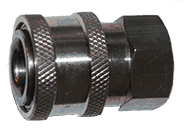
3/8" Quick Connect Socket with Female NPT Threads — Stainless Steel, High Pressure Coupler
This stainless steel 3/8" quick connect socket is the female receiving end of a high pressure quick connect system. It accepts any standard 3/8" QC plug and locks it in place with a spring-loaded collar, creating a sealed, full-flow connection that you can make and break in two seconds without tools. The 3/8" female NPT threads on the opposite end let you thread it directly into any component with a 3/8" male pipe thread port — trigger guns, spray wands, hose reel outlets, ball valves, and chemical injectors.
Quick connect fittings are the small parts that hold your entire pressure washing rig together. Every connection between your pump, hose, gun, and nozzle runs through a QC plug and socket pair. When one wears out, you get drips, pressure drops, and connections that pop apart under load. Keeping fresh sockets in your toolbox means you replace a five-dollar part instead of losing half a day to a blown connection on a job site.
Why Stainless Steel Matters
Chemical resistance. Contractors who run sodium hypochlorite, acids, degreasers, or any chemical through a downstream injector are pushing those chemicals through every fitting in the system. Brass holds up to most chemicals, but plated steel corrodes fast. Stainless steel resists SH, citric acid, oxalic acid, and every common pressure washing chemical without pitting, seizing, or weakening. If you are doing house washes, roof cleans, or concrete work with chemicals, stainless QC fittings are the right choice.
Corrosion resistance. Even without chemicals, pressure washing fittings live in a constantly wet environment. They sit in puddles on the trailer deck, get sprayed with overspray, and spend winters in unheated shops. Plated fittings rust from the inside out — the plating chips, water gets under it, and the steel corrodes invisibly until the fitting fails. Stainless steel does not have a coating to lose. The corrosion resistance goes all the way through.
Longer service life. A stainless socket lasts 3 to 5 times longer than a plated steel socket in the same application. The upfront cost is slightly higher, but you replace them far less often. Over a season of daily use, stainless fittings cost less than cheap ones.
Specifications
- Size: 3/8"
- Thread: 3/8" Female NPT (FNPT)
- Type: Quick Connect Socket (female coupler)
- Material: 304 Stainless Steel
- Max Working Pressure: 5,000+ PSI
- Flow: Full-flow internal bore — no restriction
- Locking Mechanism: Spring-loaded ball detent collar
- Compatibility: Accepts standard 3/8" QC plugs from all major manufacturers
- Max Temperature: 250 degrees F
How Quick Connect Sockets Work
The socket is the receiving half of a quick connect pair. The plug (male side) slides into the socket. Spring-loaded balls inside the collar snap into a groove on the plug, locking the two pieces together. To disconnect, pull back the collar — the balls retract and the plug slides free. The whole process takes less than two seconds and requires zero tools.
The internal valve in the socket seals automatically when the plug is removed, so you do not lose system pressure or dump water when disconnecting. This lets you swap nozzles, guns, hoses, and accessories mid-job without shutting down the machine.
Where QC Sockets Go on Your Rig
Trigger gun inlet. The most common location. A QC socket threaded into your gun lets you swap between different hoses or whip lines instantly.
Wand and nozzle connections. Sockets at the end of your wand let you swap between spray nozzles, turbo nozzles, and surface cleaner attachments without threading anything.
Hose-to-hose connections. When you need to extend your reach by adding another hose section, QC plug-and-socket pairs let you connect hoses end to end in seconds.
Chemical injector connections. QC fittings at the injector inlet and outlet let you remove the injector from the line for cleaning, servicing, or switching between injector sizes.
Hose reel plumbing. Sockets and plugs at the reel inlet and outlet let you disconnect the reel from the rest of the system for maintenance or transport.
Plug vs. Socket — Which Goes Where?
The general rule is: the plug (male nipple) goes on the side that carries pressure when disconnected, and the socket goes on the side that should seal when disconnected. In practice, most contractors put plugs on hose ends and sockets on equipment (guns, wands, injectors). This way, when you disconnect a hose, the equipment side seals automatically via the socket's internal valve.
There is no strict rule, and different shops set up differently. The important thing is consistency — once you establish a pattern, stick with it so every hose connects to every piece of equipment without adapters.
Maintenance Tips
Quick connect sockets are simple but not maintenance-free. Here is how to keep them working:
- Flush after chemical use. After running SH or any chemical, flush the system with clean water for 30 seconds. Chemical residue dries inside the socket and can score the internal valve seat, causing leaks.
- Inspect the collar regularly. Pull back the collar and look at the ball detents. If the balls are corroded, pitted, or stuck, the socket will not lock plugs securely. Replace the socket.
- Check the O-ring. The internal O-ring that seals against the plug is a wear item. If you are getting drips at a QC connection that used to be dry, the O-ring is worn. On some sockets you can replace just the O-ring; on most, it is faster and cheaper to replace the whole socket.
- Do not force mismatched sizes. 3/8" plugs go in 3/8" sockets. Forcing a 1/4" plug into a 3/8" socket (or vice versa) damages both pieces.
- Keep spares on the truck. QC sockets are cheap insurance. Keep two or three in your parts box. When one fails mid-job, you swap it out in a minute instead of packing up and going home.
Frequently Asked Questions
What is the difference between a QC socket and a QC plug?
The socket is the female receiving end with the spring-loaded locking collar. The plug is the male nipple that slides into the socket. You need one of each to make a connection. They are sold separately so you can put the right fitting on each component.
Are these compatible with plugs from other brands?
Yes. Standard 3/8" quick connect fittings follow an industry-standard profile. Our stainless sockets accept plugs from Hansen, Foster, Parker, and every other major QC manufacturer. As long as it is a standard 3/8" QC plug, it will fit.
Should I use stainless or brass QC fittings?
If you run any chemicals through your system, go stainless. If you are running plain water only, brass works fine and costs a bit less. Both are better than plated steel, which rusts and seizes within a season of commercial use.
Can I use these on a hot water pressure washer?
Yes, up to 250 degrees F. For steam applications above that, check the temperature rating of the internal seals.
How often should I replace QC sockets?
With daily commercial use, plan on 1 to 2 seasons per socket. If you are getting leaks, difficulty locking, or plugs popping out under pressure, it is time. Do not run a worn socket — a plug blowing out under 4,000 PSI is a safety hazard.
Related Products
- QC Plugs — Stainless steel and brass 3/8" and 1/4" plugs in MPT and FPT
- Fittings and Adapters — Nipples, bushings, tees, and elbows for custom plumbing
- Ball Valves — High pressure shutoff valves rated to 7,000 PSI
- Swivels — Prevent hose twist at reel, gun, and surface cleaner connections
- Chemical Injectors — Downstream injectors for house wash, roof clean, and soft wash
In stock and ships same day from Sun Brite Supply in Gaithersburg, Maryland. QC fittings are the parts you need right now — not next week. We keep every size and material on the shelf.