

S.S. Pressure Gauge 1/4 MPT
S.S. Pressure Gauge 1/4 MPT
- Order Policies
- Item# 6197
Couldn't load pickup availability
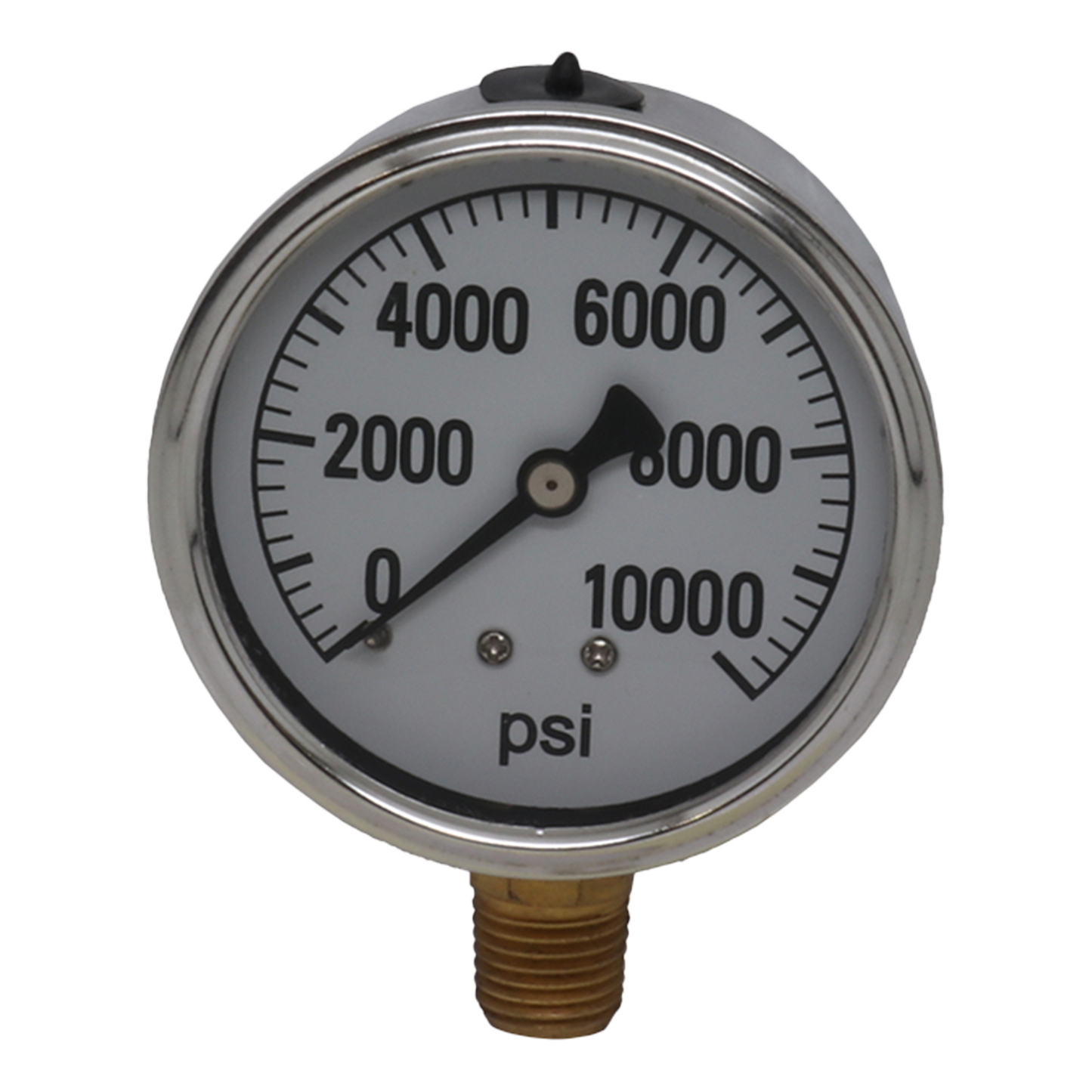
A pressure gauge is how you find out what your machine is actually doing instead of guessing. Stainless steel body, 1/4 inch MPT bottom mount, and it threads straight into an unloader block, a gauge port on the pump, or a tee in your discharge line.
Choosing the Range
Pick a gauge whose full scale is comfortably above your working pressure. Running a gauge pegged near its maximum wears the movement out fast and reads poorly at the top of the dial.
- 3,000 PSI for machines up to about 2,500 PSI
- 5,000 PSI for 3,000 to 4,000 PSI contractor rigs, the most common choice
- 10,000 PSI for high pressure work and jetting
What a Gauge Tells You
Pressure dropping off over a job usually means a worn nozzle or tired pump valves. Pressure swinging up and down points at the unloader or a starved inlet. Pressure fine at the pump but weak at the gun means you are losing it in the hose or the gun. Without a gauge, all three feel identical and get misdiagnosed as a bad pump.
See also all gauges and unloaders. Call (301) 519-9274 if you are not sure where to plumb it.