


1/4" MEG 25 Degree Stainless Steel Pressure Washer Nozzle
1/4" MEG 25 Degree Stainless Steel Pressure Washer Nozzle
- Order Policies
- Item# 5841
Couldn't load pickup availability

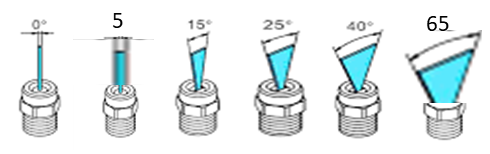
1/4" MEG 25 Degree Stainless Steel Nozzle for Pressure Washers and Surface Cleaners
The 25 degree MEG nozzle is the angle most contractors grab first. It throws a fan wide enough to cover ground quickly on concrete, siding, decks, and equipment without concentrating so much force that you damage the surface. If you only kept one MEG angle on the truck, this would be the one.
MEG stands for Mechanically Enhanced Geometry. That is not just marketing. The orifice on a MEG nozzle is precision machined rather than stamped, which gives you a sharper cutoff at the fan edges and a more even distribution of water across the entire spray pattern. With a standard stamped tip, the fan tends to taper and lose pressure toward the edges, leaving you with lighter strips that need another pass. A MEG tip holds its pattern edge to edge, which means fewer streaks on flatwork and more consistent coverage on vertical surfaces.
Specifications
| Spec | Detail |
|---|---|
| Spray Angle | 25 degrees |
| Color Code | Green |
| Thread Size | 1/4" MPT (Male Pipe Thread) |
| Orifice Material | Hardened stainless steel |
| Max PSI | 5,000 |
| Compatible With | Surface cleaners, J-rods, spray bars, wand nozzle holders |
| Orifice Sizes Available | 2.0 through 60.0 (select by GPM and PSI) |
How to Pick the Right Orifice Size
The orifice number is the part most people get confused about. It is not arbitrary. The orifice controls flow rate at a given pressure, and running the wrong size either starves your pump or overloads it. Both are expensive mistakes.
Here is the short version: match the orifice to your pump's GPM and operating PSI. Your pump manual lists both. If you are replacing the nozzles in a surface cleaner with two spray bars, each bar gets a nozzle, so divide your total GPM by two and select the orifice size for half your flow.
| Orifice Size | Approx. GPM at 3,000 PSI | Common Use |
|---|---|---|
| 2.0 | 2.0 | Small residential machines |
| 2.5 | 2.5 | Mid-range residential |
| 3.0 | 3.0 | Light commercial, small surface cleaners |
| 3.5 | 3.5 | Standard contractor machines |
| 4.0 | 4.0 | Full-size contractor rigs |
| 4.5 | 4.5 | Dual-gun setups, larger surface cleaners |
| 5.0 | 5.0 | High-flow commercial machines |
| 5.5 | 5.5 | Multi-nozzle spray bars |
| 6.0+ | 6.0+ | Industrial flow, large spray bar arrays |
When in doubt, call us at 301-519-9274 and tell us your machine's PSI and GPM. We will tell you the exact orifice size you need.
Where This Nozzle Gets Used
The 1/4" MPT thread makes this a universal fit for anything that accepts a threaded nozzle. That includes surface cleaners (the most common application), J-rods, dual lance assemblies, spray bars, and any nozzle holder with a 1/4" FPT port.
Surface Cleaner Replacement Nozzles
Surface cleaners eat nozzles. The spray bars spin at high RPM just inches from the concrete, and grit, sand, and small debris get pulled into the orifice constantly. Over time, the orifice wears oblong and the fan starts to look ragged or uneven. When that happens, the cleaner leaves stripes on the concrete instead of a clean, even pass. Most contractors replace surface cleaner nozzles every few months of regular use, and heavy-use crews swap them more often than that.
When you replace one nozzle in a surface cleaner, replace them all. Mismatched nozzles create uneven flow between the bars, which means uneven cleaning and visible lines in your work. Two new tips cost less than going back to re-clean a driveway.
J-Rod Applications
A J-rod is a bent wand fitting that holds two or more MEG nozzles at different angles, usually a low-pressure soap nozzle and a rinse nozzle. The 25 degree MEG is a popular choice for the rinse position on a J-rod because it covers enough width for efficient work without concentrating force into a narrow band. Pair it with a 65 degree or soap nozzle on the other port for chemical application.
25 Degree Spray Angle: When and Why
Each nozzle angle has a sweet spot, and the 25 degree green tip covers the widest range of everyday contractor work:
| Spray Angle | Color | Best For |
|---|---|---|
| 0° | Red | Gum removal, paint stripping, stubborn spot cleaning |
| 5° | None | Heavy-duty degreasing, close-range blasting |
| 15° | Yellow | Concrete stripping, heavy stain removal, paint prep |
| 25° (this nozzle) | Green | General cleaning: driveways, siding, decks, equipment, flatwork |
| 40° | White | Delicate surfaces: wood, vehicles, painted siding, windows |
| 65° | Black | Chemical application, downstream injector soap draw |
The 25 degree angle hits the balance point between coverage speed and cleaning force. Narrower angles clean harder but cover less area per pass. Wider angles cover more ground but spread the force thinner. For the majority of residential and commercial pressure washing work, the green 25 degree tip is the go-to.
Why Stainless Steel Over Brass
Brass MEG nozzles cost less up front, but they wear out faster. Brass is a softer metal, and the orifice distorts under high-pressure abrasion sooner than stainless. A brass nozzle on a surface cleaner might last a month or two of daily use before the fan goes ragged. Stainless steel holds its shape significantly longer, which means fewer replacements and more consistent cleaning results between swaps.
Stainless also handles the chemical environment better. Sodium hypochlorite, degreasers, and acidic cleaners all pass through these nozzles during downstream application, and stainless steel resists corrosion from all of them. If you are running chemicals through your rig daily, stainless is the only material that makes sense.
Signs It Is Time to Replace Your MEG Nozzles
- Ragged or uneven fan pattern. Hold the nozzle at arm's length and check the spray against a wall. If the fan has dead spots, tails, or irregular edges, the orifice is worn.
- Visible stripes on concrete after surface cleaning. Uneven nozzles leave alternating clean and dirty lines that show up as soon as the concrete dries.
- Lower-than-expected cleaning pressure. A worn orifice passes more water at lower velocity. Your pump is working the same, but the cleaning force at the surface drops.
- One nozzle sprays differently than the other. If your surface cleaner has two nozzles and one fan looks wider or weaker, that tip is gone. Replace both.
Maintenance
MEG nozzles are wear items, not lifetime parts. That said, you can get more life out of them with a couple of habits:
- Flush before shutdown. Run clean water through your machine for 30 seconds after chemical use. Dried chemical residue accelerates orifice wear.
- Clear clogs carefully. Use a brass nozzle cleaning tool or a soft wire, not a steel pick. Gouging the orifice with a hard tool ruins the spray pattern permanently.
- Store tips in a nozzle holder. Loose nozzles rattling around in a toolbox get dinged and chipped. A nozzle holder keeps them organized and protected.
- Inspect monthly. A two-minute spray check once a month catches worn tips before they cost you a callback on a dirty driveway.
Frequently Asked Questions
What is the difference between a MEG nozzle and a regular pressure washer nozzle?
A standard nozzle has a stamped orifice. A MEG nozzle has a precision-machined orifice that produces a more even spray distribution across the entire fan. The result is fewer streaks, more consistent cleaning, and longer nozzle life. The difference is most noticeable on flatwork where any unevenness in the spray shows up immediately.
Can I use a 1/4" MEG nozzle on a quick connect wand?
Not directly. The 1/4" MPT thread screws into a nozzle holder or spray bar fitting. To run it on a QC wand, thread a 1/4" FPT quick connect plug onto the nozzle first. That converts it to a snap-on tip that fits any standard 1/4" quick connect socket on your wand.
How do I know what size MEG nozzle to order for my surface cleaner?
Check the nozzle currently in the surface cleaner. It will have a number stamped on it, like "2504" which means 25 degrees at 4.0 orifice. Match that. If you cannot read the stamp, look up your surface cleaner model's spec sheet for the recommended nozzle size, or call us with your machine's PSI and GPM and we will figure it out.
Are all 1/4" MEG nozzles interchangeable between brands?
Yes. The 1/4" MPT thread is a standard pipe thread. A MEG nozzle from any manufacturer threads into any 1/4" FPT nozzle holder, surface cleaner bar, or adapter. The thread pitch and diameter are identical across brands.
How often should I replace my surface cleaner nozzles?
It depends on usage. Contractors running a surface cleaner daily on concrete typically replace nozzles every 2 to 4 months. Lighter use stretches that to 6 months or more. Check the spray pattern regularly and replace when the fan starts looking uneven or ragged.
Why do my new nozzles spray differently than the old ones?
Your old nozzles were worn. The orifice had opened up from abrasion, so they were passing more water at lower pressure than a fresh tip. New nozzles will feel sharper and more aggressive because they are working at the correct flow rate and pressure. If the new tips feel too strong for the job, step up one orifice size or move to a wider spray angle.