


QC Plug 3/8" Fnpt Stainless Steel
QC Plug 3/8" Fnpt Stainless Steel
- Order Policies
- Item# 4959
Couldn't load pickup availability

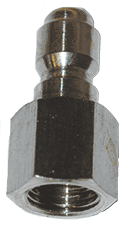
Brass quick connects corrode. It happens every time. You run sodium hypochlorite through your soft wash rig, and within a few weeks the brass fittings turn green, start leaking, and eventually seize up completely. This 3/8" stainless steel quick connect plug eliminates that problem. It is built from 304 stainless steel that resists corrosion from bleach, acid, and every other chemical you run through a pressure washing setup.
If you are running any kind of chemical application through your system, whether that is SH for house washing, oxalic acid for wood brightening, or degreasers for flatwork, stainless steel fittings are not a luxury upgrade. They are a maintenance decision that pays for itself the first time you do not have to replace a corroded fitting on a job site.
Why Stainless Steel Quick Connects Matter for Pressure Washing
The quick connect system on a pressure washer handles thousands of connection and disconnection cycles over the life of the equipment. Every time you swap a nozzle, change a lance, connect a downstream injector, or hook up a surface cleaner, those QC fittings are doing the work. The plug is the male side of the connection, the piece that slides into the socket and locks in place with the spring-loaded ball mechanism.
Standard brass QC fittings work fine on a homeowner machine that sees water only. But in commercial pressure washing, the chemicals you push through your system attack brass aggressively. Sodium hypochlorite is the worst offender. It oxidizes brass within days of first contact, creating verdigris buildup that prevents the quick connect from seating properly. Once the seal is compromised, you get leaks under pressure, which means lost flow, inconsistent spray patterns, and wasted chemical.
304 stainless steel is virtually immune to the chemicals used in pressure washing and soft washing. It will not react with bleach, will not corrode from oxalic acid, and will not pit from exposure to alkaline strippers. The fitting stays clean, the O-ring seal stays intact, and the connection stays tight job after job.
Product Specifications
- Type: Quick connect plug (male insert)
- Thread: 3/8" Female NPT (FNPT)
- Material: 304 stainless steel body
- Pressure Rating: Rated for high-pressure applications up to 5,000+ PSI
- Temperature Range: Suitable for both cold and hot water pressure washers
- O-Ring: Chemical-resistant seal for leak-free connection
- Connection Style: Standard industrial quick disconnect, compatible with all standard QC sockets
- Corrosion Resistance: Will not rust, corrode, or react with sodium hypochlorite, oxalic acid, sodium hydroxide, or common pressure washing chemicals
How Quick Connect Plugs and Sockets Work Together
If you are new to building a pressure washing setup, here is how the quick connect system works. There are two halves to every QC connection: the plug and the socket. The plug is the piece with the smooth cylindrical body that inserts into the socket. The socket has spring-loaded balls inside that grab a groove on the plug and lock it in place. To disconnect, you pull back the collar on the socket, the balls release, and the plug slides out.
This particular fitting is a 3/8" QC plug with female NPT threads. That means the threads are on the inside of the fitting. You would thread this onto any component that has a 3/8" male NPT nipple or barb. Common applications include threading onto the outlet of a downstream chemical injector, connecting to the inlet side of a spray gun, or adding a quick disconnect point to any 3/8" male threaded port on your system.
The 3/8" size is the standard for most commercial pressure washing equipment. It matches the thread size on the majority of guns, lances, hoses, and accessories designed for machines in the 2,000 to 5,000 PSI range.
Where This Fitting Gets Used
Every pressure washing rig has multiple QC connection points. Here are the most common places contractors use stainless steel quick connect plugs:
- Spray gun inlet: The fitting that connects your high-pressure hose to your spray gun. This sees every chemical that runs through your system.
- Lance connections: Quick-swap between a standard wand, a dual-lance setup, or an extension wand without threading anything on or off.
- Downstream injector ports: The chemical injector on your machine or buffer tank is constantly exposed to concentrated chemicals. Stainless steel here is critical.
- Surface cleaner connections: The swivel and inlet on your surface cleaner take constant abuse from pressure and vibration. A reliable QC plug keeps the connection solid.
- Hose-to-hose connections: When you need to extend your reach with additional hose lengths, QC fittings let you connect and disconnect in seconds.
- Ball valve connections: Adding quick disconnects to ball valves on your rig lets you reconfigure flow paths without tools.
Stainless Steel vs. Brass vs. Plated Steel: What You Need to Know
There are three materials you will find in pressure washer quick connects, and they are not interchangeable in performance.
Brass is the cheapest option and works fine for water-only applications. But it corrodes rapidly when exposed to sodium hypochlorite, oxalic acid, and other common pressure washing chemicals. Brass QCs on a soft wash rig might last a few weeks before they start leaking. On a machine that only ever sees water, brass can last a season or more.
Plated steel looks like stainless when it is new, but the chrome or zinc plating wears through with use, exposing the carbon steel underneath. Once the plating fails, the fitting rusts quickly. These are slightly better than brass for chemical resistance but are not a long-term solution.
304 stainless steel is the professional choice. The corrosion resistance is inherent to the alloy, not a surface coating that can wear off. A stainless QC fitting will outlast the equipment it is installed on. The upfront cost is higher than brass, but the total cost of ownership is lower because you are not replacing fittings every few months.
Pair This with a Complete Stainless QC Setup
A quick connect system only works when both halves match. If you are upgrading to stainless steel, replace both the plugs and sockets at every connection point for the full corrosion resistance benefit.
- 3/8" SS QC Plug – Male NPT – For components with female threaded ports.
- 3/8" SS QC Socket – Female NPT – The socket half that receives this plug.
- 3/8" SS QC Socket – Male NPT – Socket with male threads for female-threaded ports.
- Browse All Quick Connect Fittings – Complete selection of QC plugs and sockets in brass and stainless steel, 1/4" and 3/8" sizes.
Installation Tips
Thread the fitting on hand-tight, then give it one quarter to one half turn with a wrench. Do not over-tighten NPT fittings. The tapered threads are designed to seal as they tighten, and over-torquing can crack the female port on the component you are threading into, especially on soft metals like aluminum pump housings.
Use PTFE thread tape on all NPT connections. Wrap the tape clockwise (looking at the threaded end) so it does not unwrap as you thread the fitting in. Three to four wraps is sufficient. Pipe dope also works but can be messy and may contaminate chemical lines.
Check your O-rings periodically. The plug O-ring is what creates the seal between the plug and socket when connected. If the O-ring is cracked, flattened, or missing, the connection will leak under pressure. Replacement O-rings are inexpensive and take seconds to install.
Frequently Asked Questions
Will this plug fit my existing QC sockets?
Yes. This is a standard industrial quick connect plug that is compatible with all standard 3/8" QC sockets, regardless of the socket material. You can mix stainless plugs with brass sockets and vice versa. The quick connect interface is the same across materials.
Is 3/8" the right size for my pressure washer?
For most commercial pressure washers between 2,000 and 5,000 PSI, 3/8" is the standard fitting size. Smaller residential machines sometimes use 1/4" fittings. Check the thread size on your spray gun, hose, and pump outlet to confirm. If you see 3/8" threaded ports, this is the correct size.
What is the difference between a plug and a socket?
The plug is the smooth cylindrical piece that inserts into the socket. The socket is the outer piece with the locking collar. You need one of each to make a quick connect pair. The plug goes on one side of the connection, the socket goes on the other. Convention is plug on the upstream (pressure) side and socket on the downstream (tool) side, but both orientations work.
Can I use this with hot water pressure washers?
Yes. 304 stainless steel handles the temperature ranges of both cold and hot water pressure washers without any degradation in performance or seal integrity.
How often should I replace stainless steel QC fittings?
Under normal commercial use, stainless steel quick connect fittings can last for years without replacement. The most common maintenance item is the O-ring, which should be inspected and replaced if it shows wear. The stainless steel body itself will outlast most other components on your rig.
In stock and ships same day from Sun Brite Supply in Gaithersburg, Maryland. Professional pressure washing fittings, parts, and chemicals for contractors who need reliable equipment that holds up to daily chemical exposure.
]]>